Climb Kilimanjaro
5,895 metres, no technical climbing, and one thing that decides whether you summit: how many days you give your body to adjust.
Choosing a route
Four routes, none of them technical, all ending at the same summit. What really separates them is how many days they give you to adjust, and how many people you share the path with. If you're not sure, choose Lemosho.
9 daysLemosho RouteThe quietest start and the best acclimatisation of the four. Our recommendation.Guide price$2,422 per person2 sharing · low seasonSee this route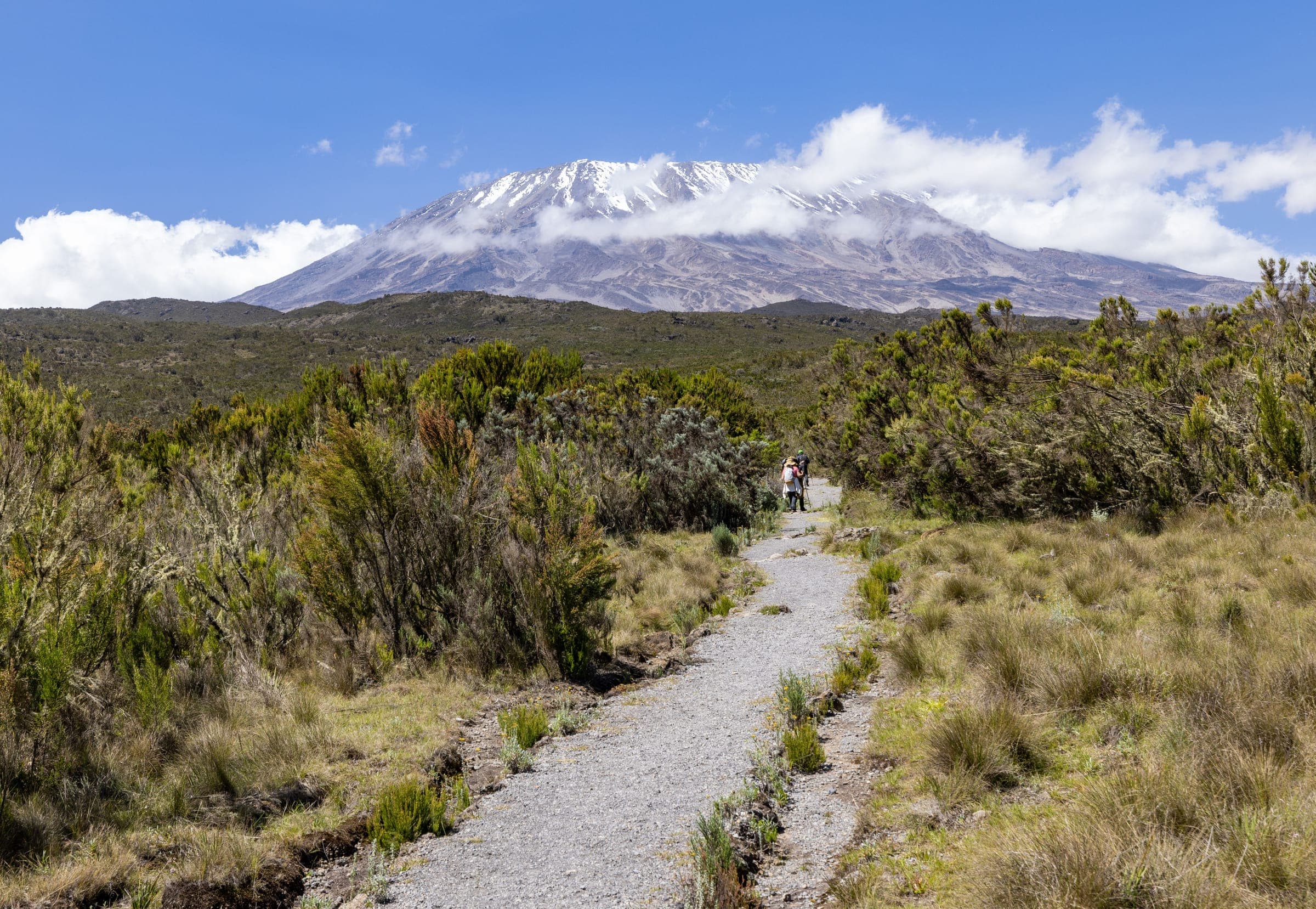 8 daysMachame RouteScenic and popular, with a good climb-high, sleep-low profile. Expect company at camp.Guide price$2,364 per person2 sharing · low seasonSee this route
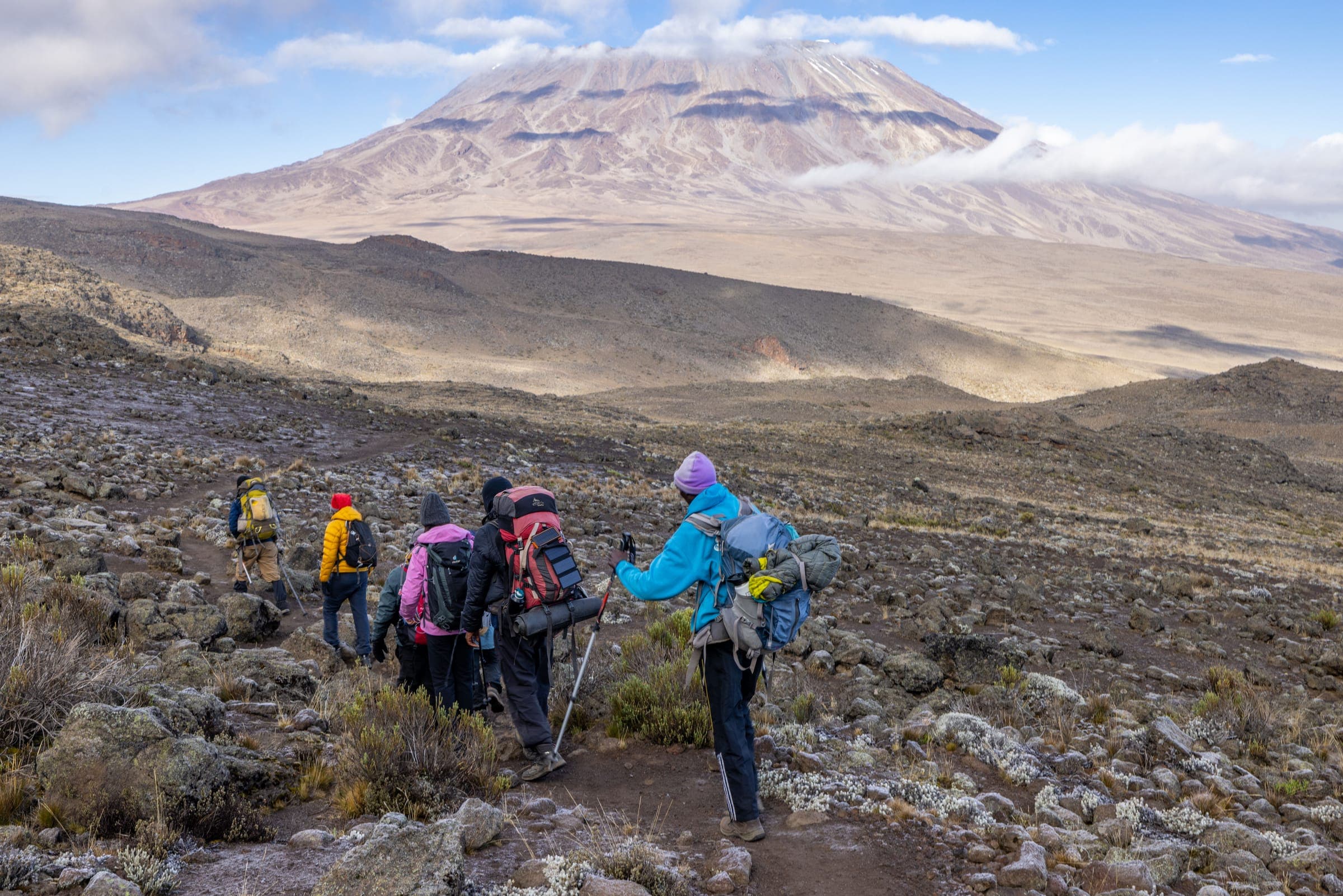 8 daysRongai RouteFrom the north, on the drier side of the mountain. A good choice in the rainy months.Guide price$2,442 per person2 sharing · low seasonSee this route7 daysMarangu RouteHuts instead of tents and a lower price, but less time to adjust and lower odds of summiting.Guide price$2,425 per person2 sharing · low seasonSee this route
Short on time? Try a day hike
No week to spare? Spend a day on the mountain by Machame's rainforest, the Shira Plateau's moorland or Marangu to Mandara Hut, and be back at your hotel by evening. No climbing experience needed.
Why more days means a better chance of reaching the top
Fitness doesn't protect you from altitude. At 5,895 metres each breath carries about half the oxygen it does at sea level, and the only thing that really helps is time: days for your body to adjust its breathing and make more red blood cells.
That's why the length of the route matters more than anything else you choose. Every extra day on the way up is another night for your body to catch up before summit night. A shorter climb saves money, but it takes that time away.
The longer routes also follow the rule mountaineers call "climb high, sleep low": walk up to a higher point during the day, then come down to sleep. On Machame and Lemosho you have lunch at Lava Tower, about 4,630 metres, then sleep at Barranco, about 670 metres lower.
So we recommend seven days or more on the mountain. Six is possible on Marangu, and we'll book it if it's what you want, but we'll tell you plainly that it lowers your chances.
Who can climb Kilimanjaro, and the fitness you need
Anyone aged 10 or over, in good health, who can walk for six to eight hours several days running. There's no climbing, no ropes and no experience needed.
Give yourself two to three months of regular walking beforehand, with hill days whenever you can: long walks with real ascent, in the boots you'll climb in, carrying a daypack. Time on your feet counts for more than time in the gym.
If you have a heart or lung condition, or have had trouble at altitude before, talk to your doctor before you book.
Altitude sickness, stated honestly
Most climbers feel the altitude in some way. The common signs are a headache, nausea, poor sleep, and being out of breath while you're resting. Tell your guide as soon as you notice any of them, and don't hide them to keep up with the group.
Our guides are trained in altitude first aid. They check how each climber is doing every morning and every evening, and they'll ask you directly rather than wait for you to mention it.
Anyone with serious symptoms goes down straight away, with a guide. Going down is the real treatment: losing even a few hundred metres usually brings relief, and nothing else does the same job.
How we treat the crew
Every climb depends on the porters, cooks and guides who carry, cook and lead. How they're treated is part of what you're paying for.
- Fair pay for every member of the crew.
- Proper food on the mountain, and warm, waterproof kit for the cold nights.
- Every load is weighed at the park gate, so no porter carries more than the park's 20 kg limit.
- Tips are handed directly to each crew member.
Kilimanjaro kit
You walk from warm rainforest to a summit night well below freezing. Most of this can be hired in Arusha or Moshi; boots are the one thing to bring from home.
- Warm layers: thermal base layers, a fleece, an insulated jacket and a waterproof shell.
- A four-season sleeping bag.
- Boots you've already broken in on your training walks.
- Trekking poles, which save your knees on the way down.
- A head torch, with spare batteries, for summit night.
- Water bottles rather than a bladder, whose tube freezes on summit night.
Questions climbers actually ask
Six to eight days on the mountain, by route, plus an arrival day before you start. Marangu can be done in six, Machame and Rongai take seven, and Lemosho eight. Shorter is cheaper, but every day you cut is a day less for your body to adjust, which is why we recommend seven or more.
January to March and June to October, when the routes are driest; those are also the busiest months. April and May bring the long rains, with wet trails and the views often closed in. Summit night is below freezing whichever month you choose.
No. Every route is a trek: long, steep walking at altitude, with no ropes or technical climbing. What you do need is the fitness to walk for several hours on consecutive days.
You come down with a guide, and anyone else in your group carries on with the others. Turning back is safety, not failure: the mountain will still be there, and nobody is ever pushed on against their guide's judgement.
Yes, in Arusha or Moshi. Sleeping bags, down jackets, trekking poles and more can all be hired, so you don't have to fly them in. Boots are the exception: bring your own, already broken in.
Tips are a real part of the crew's income on Kilimanjaro. We give you recommended amounts for each role in writing before you climb, so there is no guessing on the last day, and the tips go directly to each crew member.
Yes. Climb first, then go on safari or to the coast: your legs get a rest in the vehicle or on the beach, and you're not carrying safari fatigue up the mountain.
Most climbers add a few days in the parks or on the coast once they're down. Climb first, then relax.