The Great Migration
Not one event in one place, but a continuous circuit. So the best time to see the Great Migration in Tanzania depends on which part of it you want to be standing in.
What it actually is
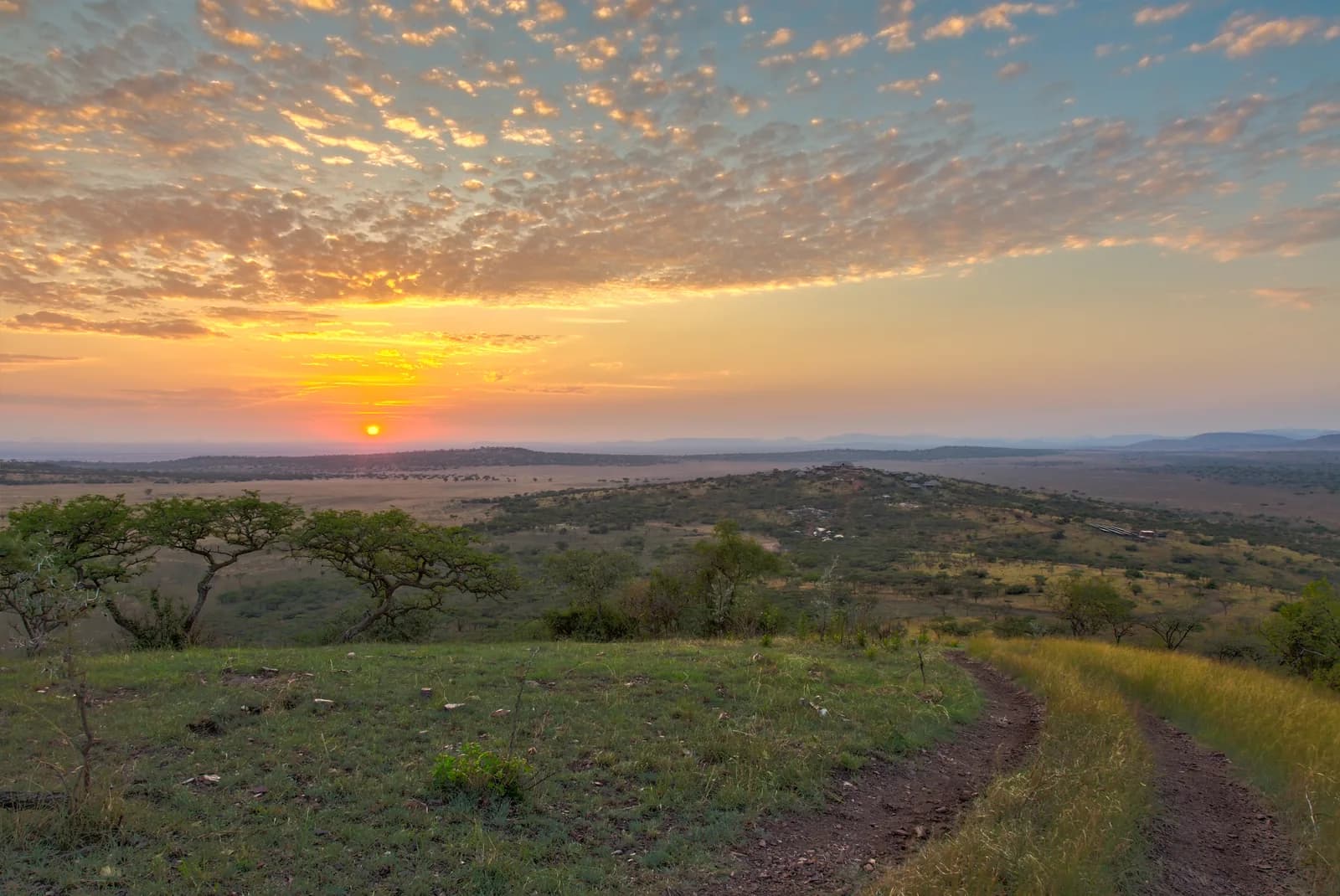
Around one and a half million wildebeest, with zebra and gazelle alongside them, moving in a rough clockwise loop between the southern Serengeti and the Masai Mara in Kenya, following rainfall and grazing. It does not start or stop. It has no schedule.
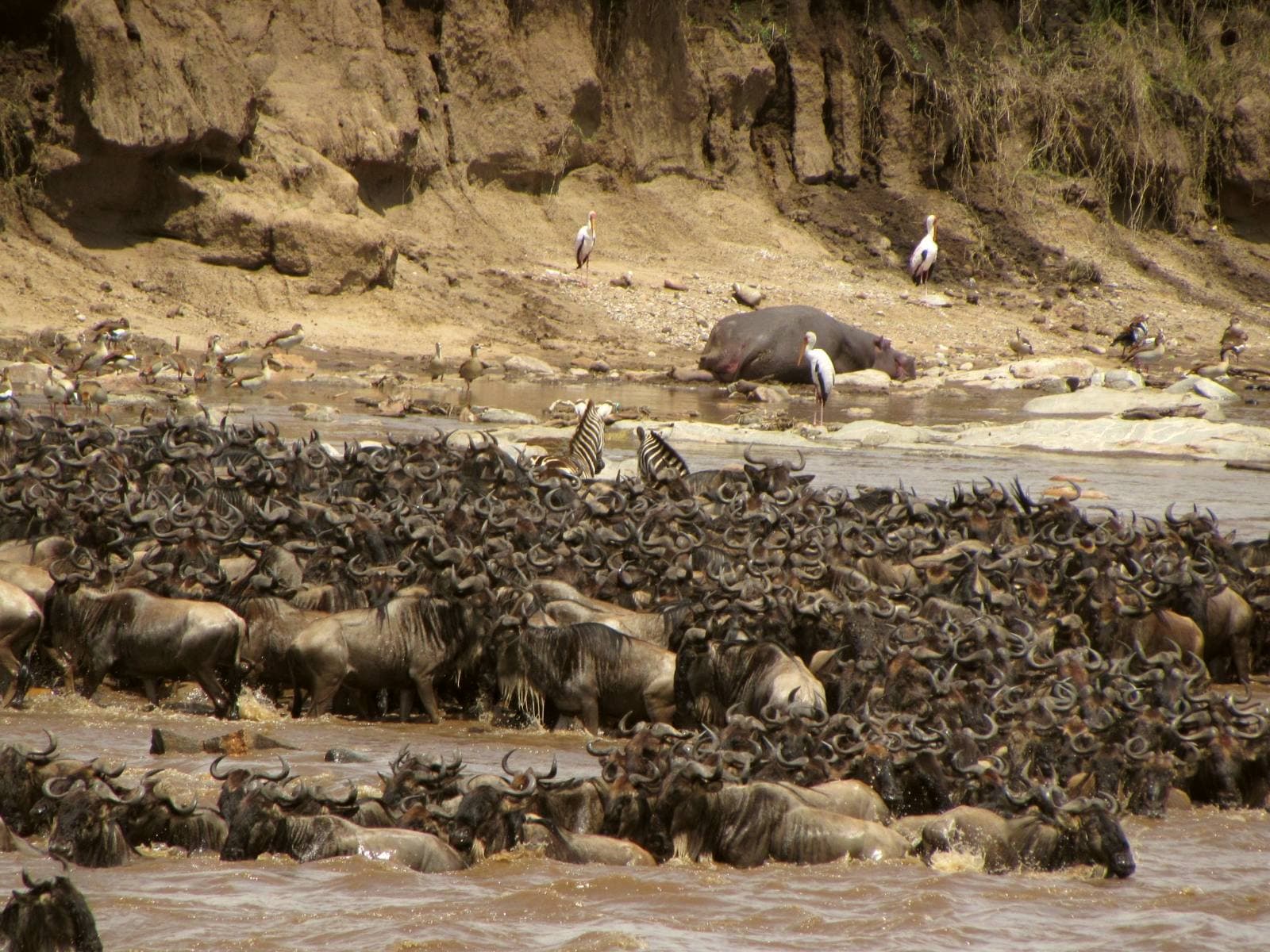
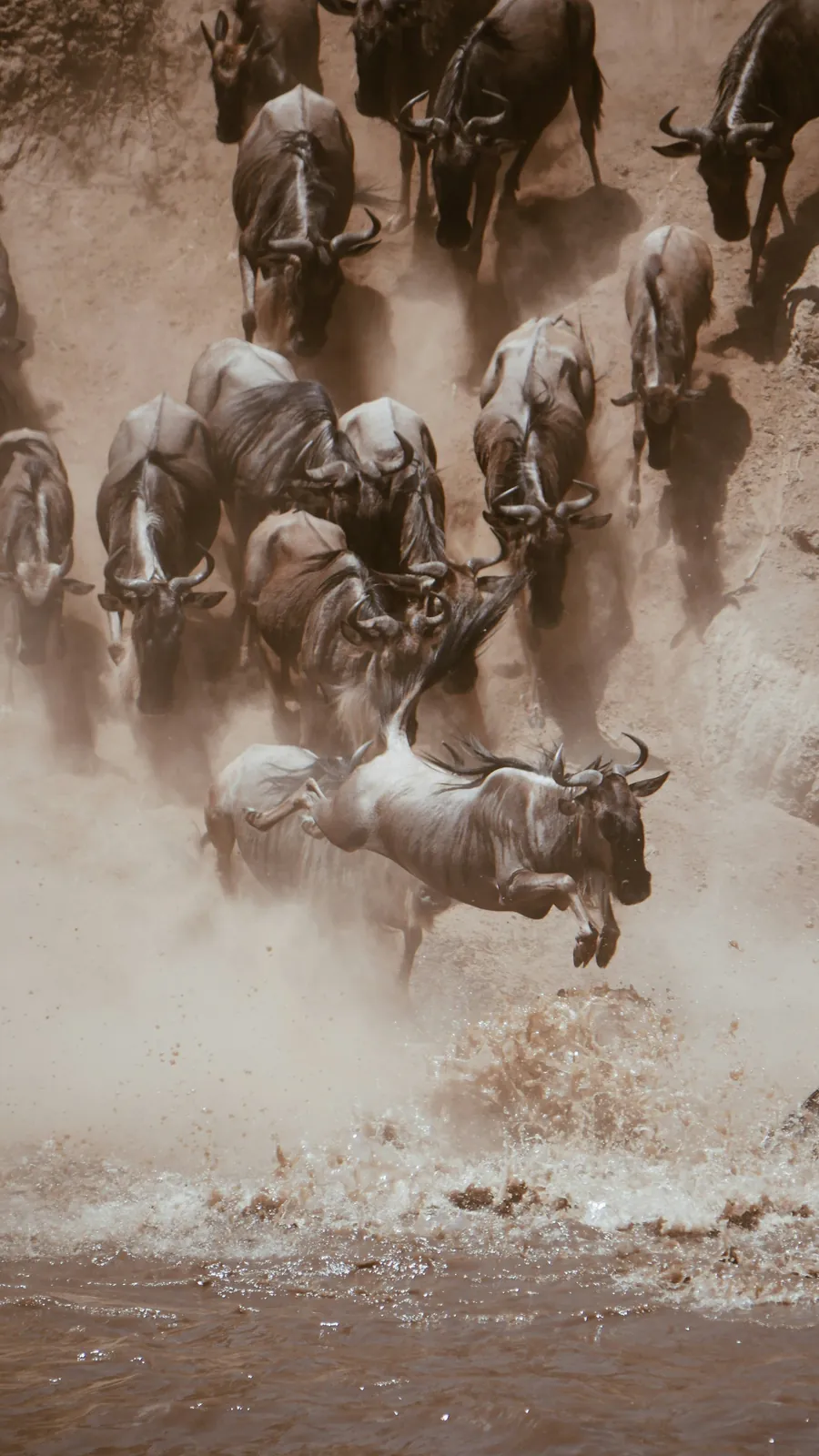
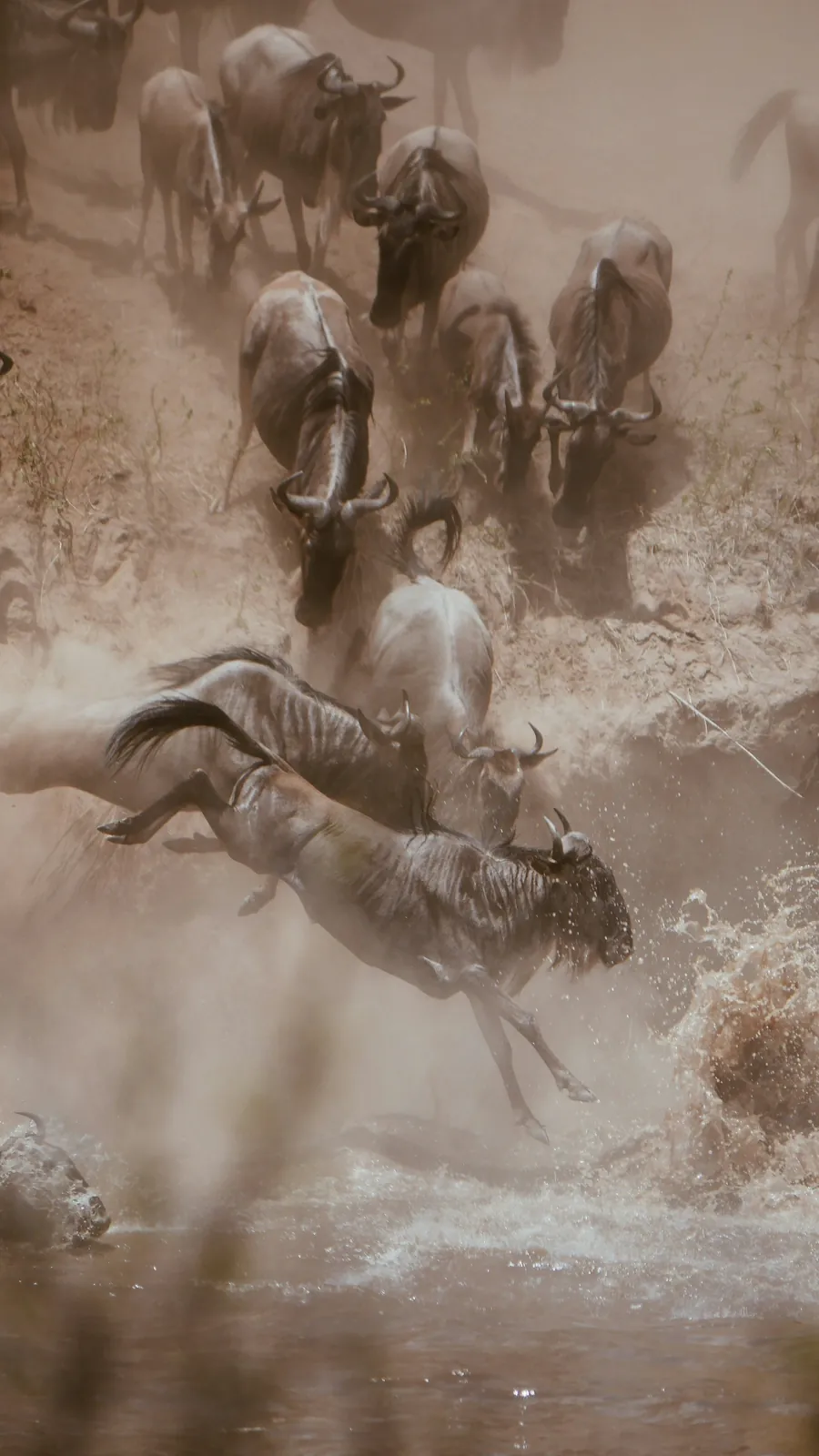
What people picture (animals leaping into a crowded river) is a few weeks of it, in one place, and by far the most crowded part to watch.
The best time to see the Great Migration in Tanzania
Calving, late January to March, on the short-grass plains around Ndutu. Roughly half a million calves are born in a matter of weeks, and every predator in the ecosystem is there. Green, dramatic, and comparatively quiet.
Crossings, July to September, at the Mara River in the northern Serengeti. Genuinely spectacular, genuinely unpredictable, and shared with a lot of other vehicles. Herds can gather at a bank for hours and then not cross at all.
What we will not promise
No operator can guarantee a crossing. The herds move on rainfall, timing shifts by weeks year to year, and a river crossing can be missed by a day or an hour. We position you in the right sector at the right time and give you enough nights to improve the odds. That is the honest limit of what planning can do.
If a guarantee matters more to you than the spectacle, calving season is the safer choice: the herds are concentrated and stationary for weeks rather than moving through a bottleneck.
How to plan around it
- Decide the half you want first (calving or crossings), then the month, then the camps.
- Allow three to four nights in the relevant sector. Two nights is a coin toss.
- Book far earlier for July to September; the good northern camps are small and sell out eight to twelve months ahead.
- Fly into the sector rather than driving across the park, or you will spend the sightings budget on transit.
- Consider October: dry, still very good, and a fraction of the August company.
Gallery
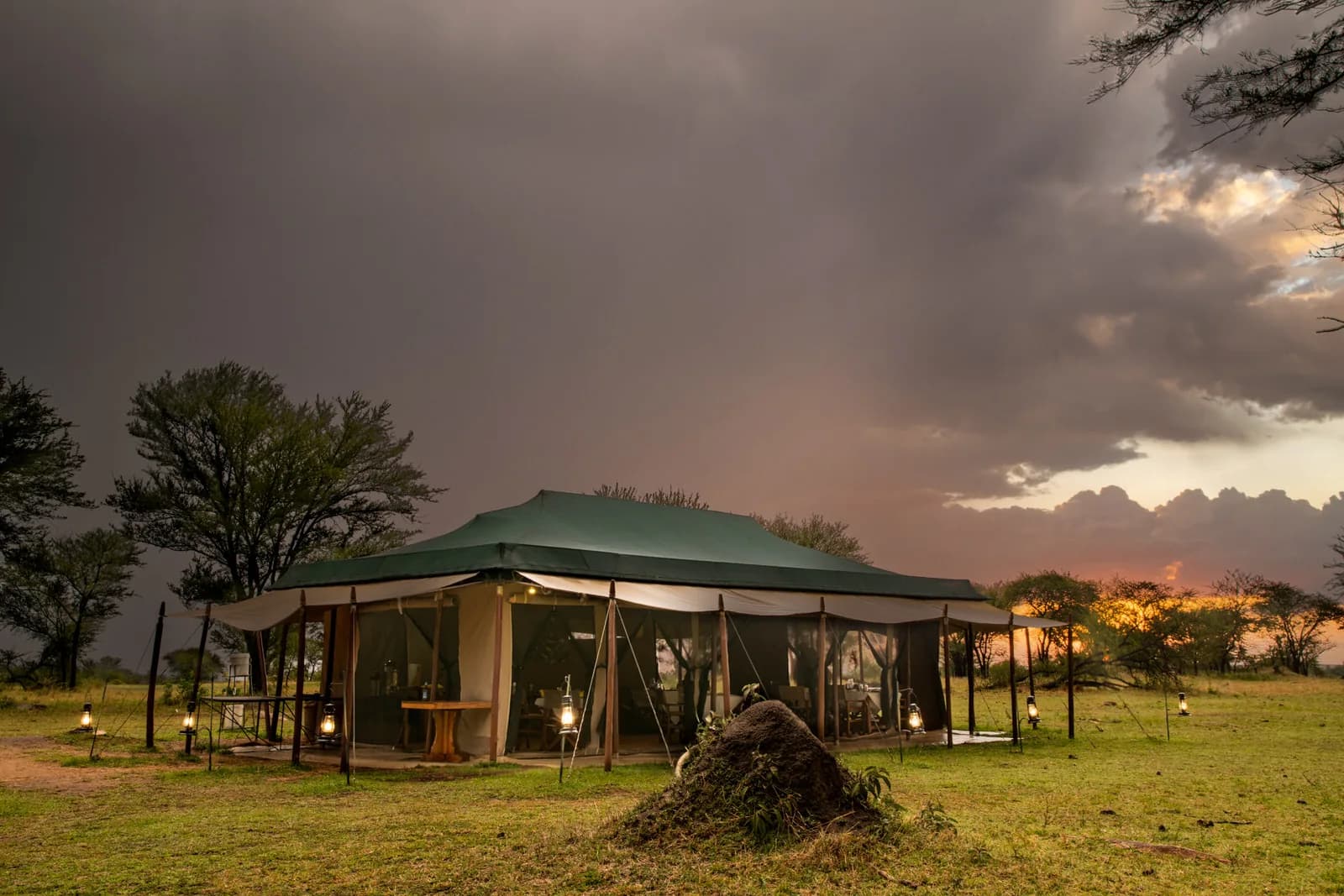
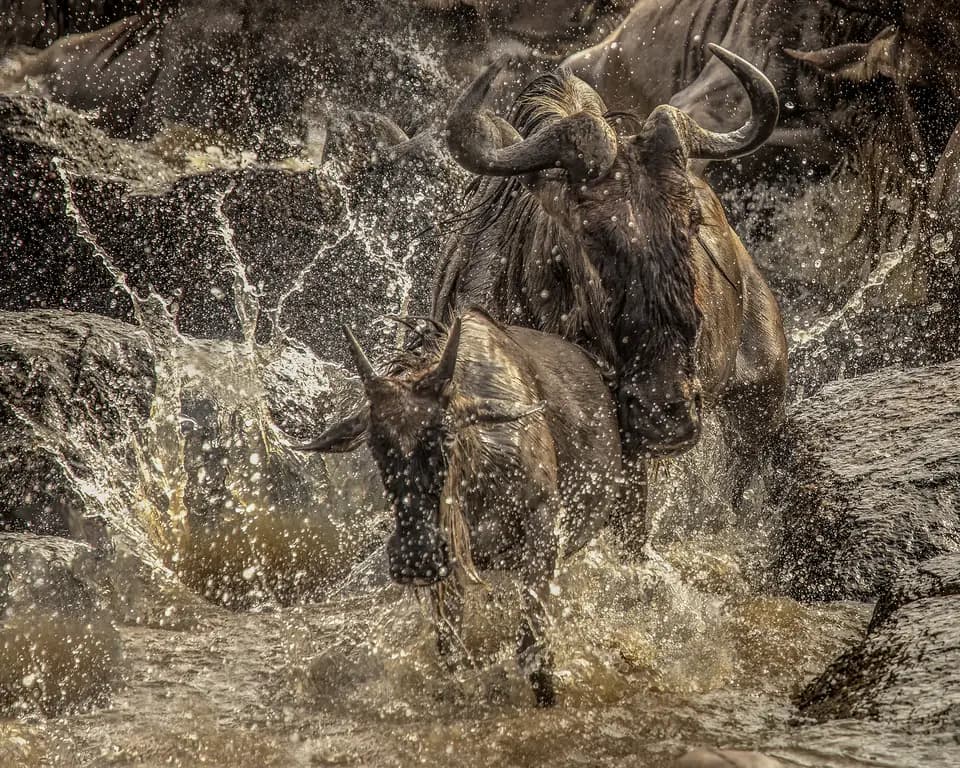 Photo: Dancing Duma Tented Camp
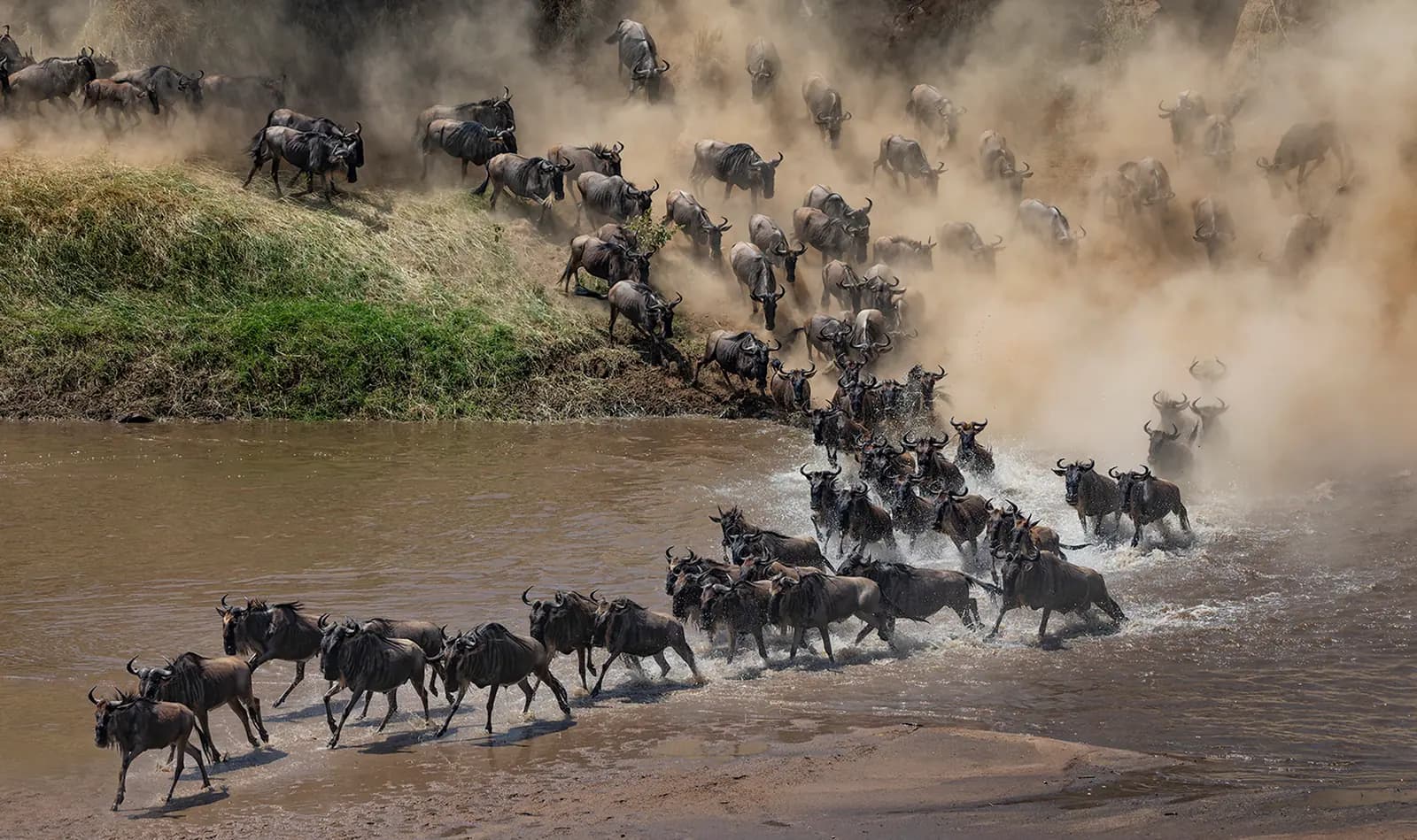 Photo: Dancing Duma Tented Camp
Questions travellers actually ask
No, and anyone who does is selling you something they cannot deliver. We can put you in the right place at the right time with enough nights to make it likely.
Yes: the calving half, on the southern plains. Huge concentrated herds, newborns, and intense predator activity. It is not a river crossing, and it is often the better experience.
Three to four in the relevant sector. The migration rewards patience more than it rewards distance covered.
No. The circuit spends most of the year in Tanzania, and both the calving grounds and the Mara River crossings are on the Tanzanian side.
February, for calving on the southern plains: the herds are concentrated and stay put for weeks, with far fewer vehicles than in August. If you want the north, October is dry, still very good, and much quieter than the crossing peak.
Moving north-west through the central Serengeti in April and into the western corridor in May. It is the long rains: green, very quiet and much cheaper, but some camps close and some roads get difficult. Worth it if you would rather have the park nearly to yourself than a guaranteed dry morning.
Ask about this journey
Send us a few details and a person on the team will reply personally, not a template.
Where to base yourself, and how the season fits a whole journey.