Best time to visit Tanzania
There is no bad month, but there is a wrong month for what you specifically want. Rain decides where the herds are, how much you pay, and how many other vehicles you share a sighting with.
Month by month
Rainfall drives everything: the herds, the prices and the crowds. These are patterns rather than promises; seasons shift by weeks between years and we will tell you what your specific dates look like.
The best time to visit Tanzania for the trip you want
- If you want river crossings: late July to early September, in the northern Serengeti, and accept the company.
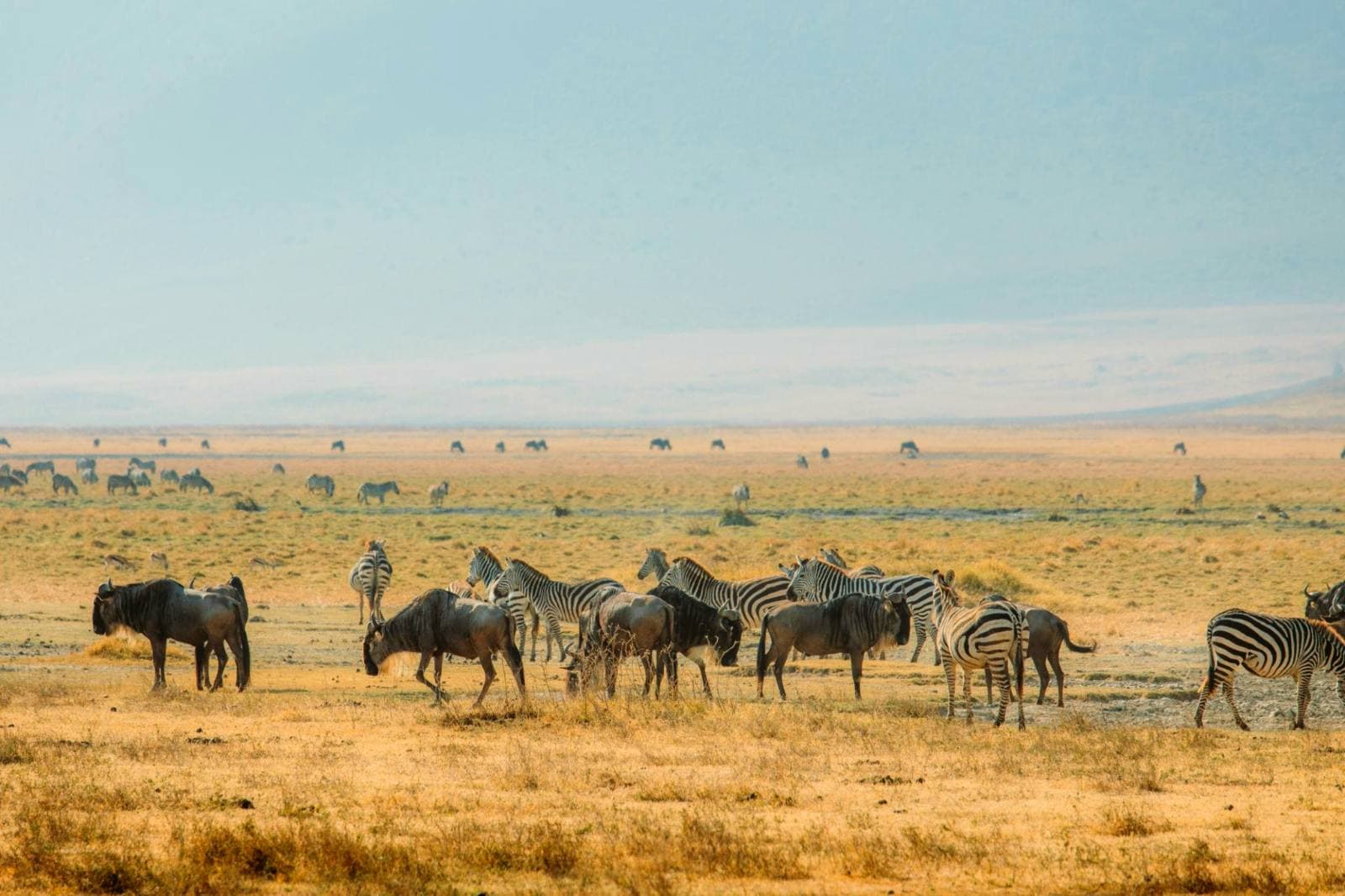
- If you want newborns, predators and the best light: February on the southern plains.
- If you want the fewest vehicles for the money: April, May or November.
- If you want the simplest, most reliable safari: June to October, and book early.
- If you are climbing Kilimanjaro too: January to March or June to October, when the routes are driest.
- If Zanzibar is on the end: avoid April and May, when the coast gets the heaviest rain of the year.
A note on the rains
Rain in Tanzania is rarely all-day drizzle. In the green season it usually arrives as a heavy afternoon storm that clears within an hour and leaves extraordinary light behind it. Game drives continue.
April and May are the genuine exception. That is when rain can be persistent, when black-cotton soil makes some tracks impassable, and when a handful of camps close entirely. We still send people then, but only travellers who would rather have an empty park and a lower price than a guaranteed dry morning.
And a note on crowds
Crowding in Tanzania is intensely local. The Ngorongoro crater floor at ten in the morning in August is busy in a way that surprises people. The same park at dawn, or the western Serengeti in May, is empty. Sector and hour matter more than month, which is most of what our planning is actually for.
Questions about timing
February for photography and calving, August for crossings, October for the best balance of conditions, price and quiet. There is no month with no trade-off.
No. It is the time many guides prefer. The landscape is transformed, the calving is the most concentrated wildlife event of the year, and there are fewer vehicles. You accept some rain.
Very unlikely outside April and May. Storms are short and dramatic, tracks in the main parks handle them, and vehicles are built for it.
Only if constraints matter: April and May if you need guaranteed dry weather, and late December if you dislike festive-season pricing and full camps.
June to October works for both: dry in the parks and on the coast. Late January and February is the other good window, with calving in the Serengeti and mostly dry, hot weather on Zanzibar. Avoid April and May, when the coast gets the heaviest rain of the year and some beach hotels close.
For June to October, book 8–12 months ahead. For other months, 3–6 months is usually enough. Inside three months we can often still make it work, but you take what is left.
Once you have a month, the sector and the length are the next two decisions.