Lake Natron
A soda lake under an active volcano, deep in Maasai country. Hot, dusty and rough on the road, and unlike anywhere else on the circuit.
Why go
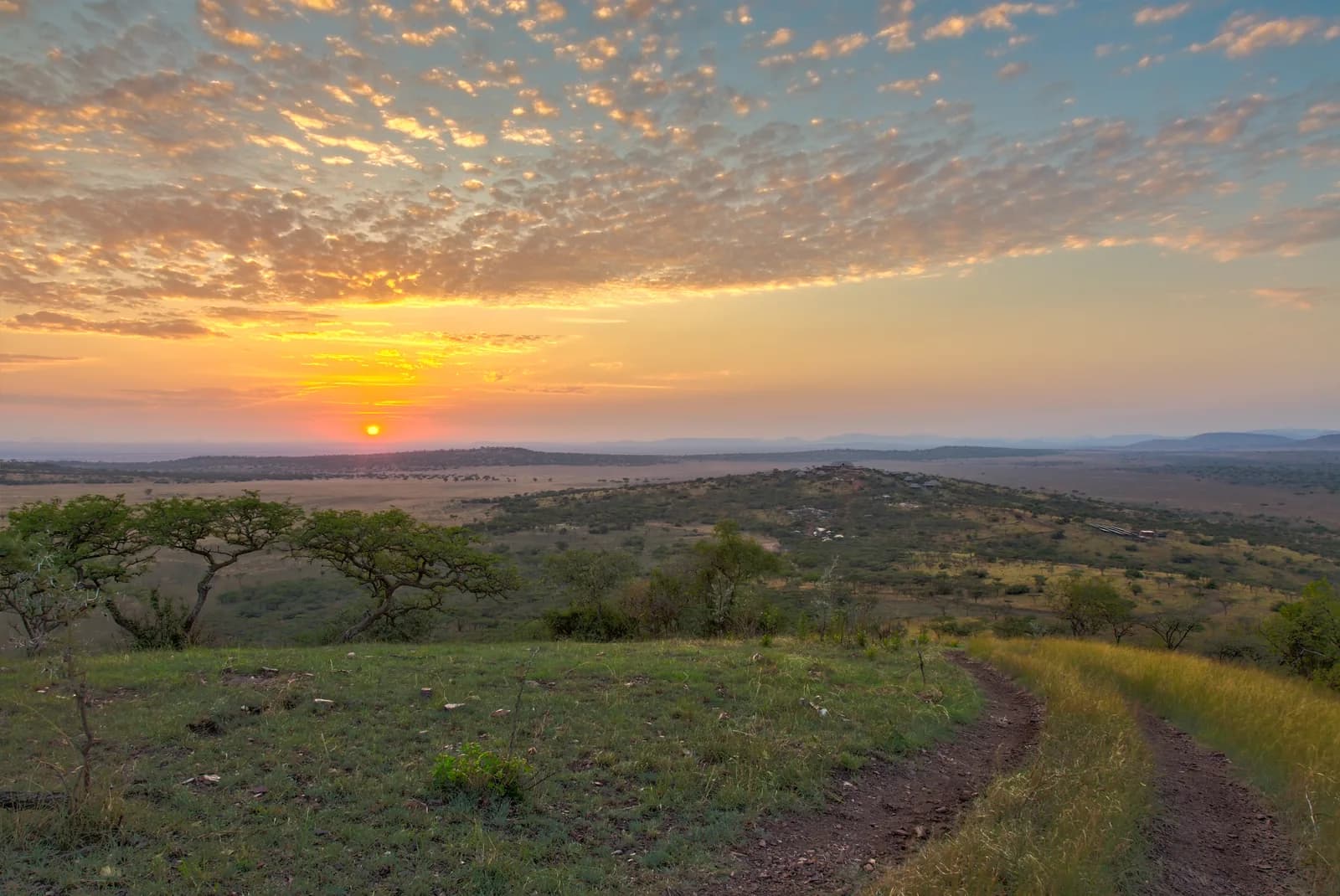
Lake Natron is not a national park and does not feel like one. There are no game drives in the usual sense. You come for the landscape: a shallow, caustic lake stained red and pink by algae, the cone of Ol Doinyo Lengai above it, and the dry Rift Valley country of the Maasai all around.
It also sits on the back road into the Serengeti from the north-east, so one or two nights here can turn a long drive into part of the journey.
What there is to do
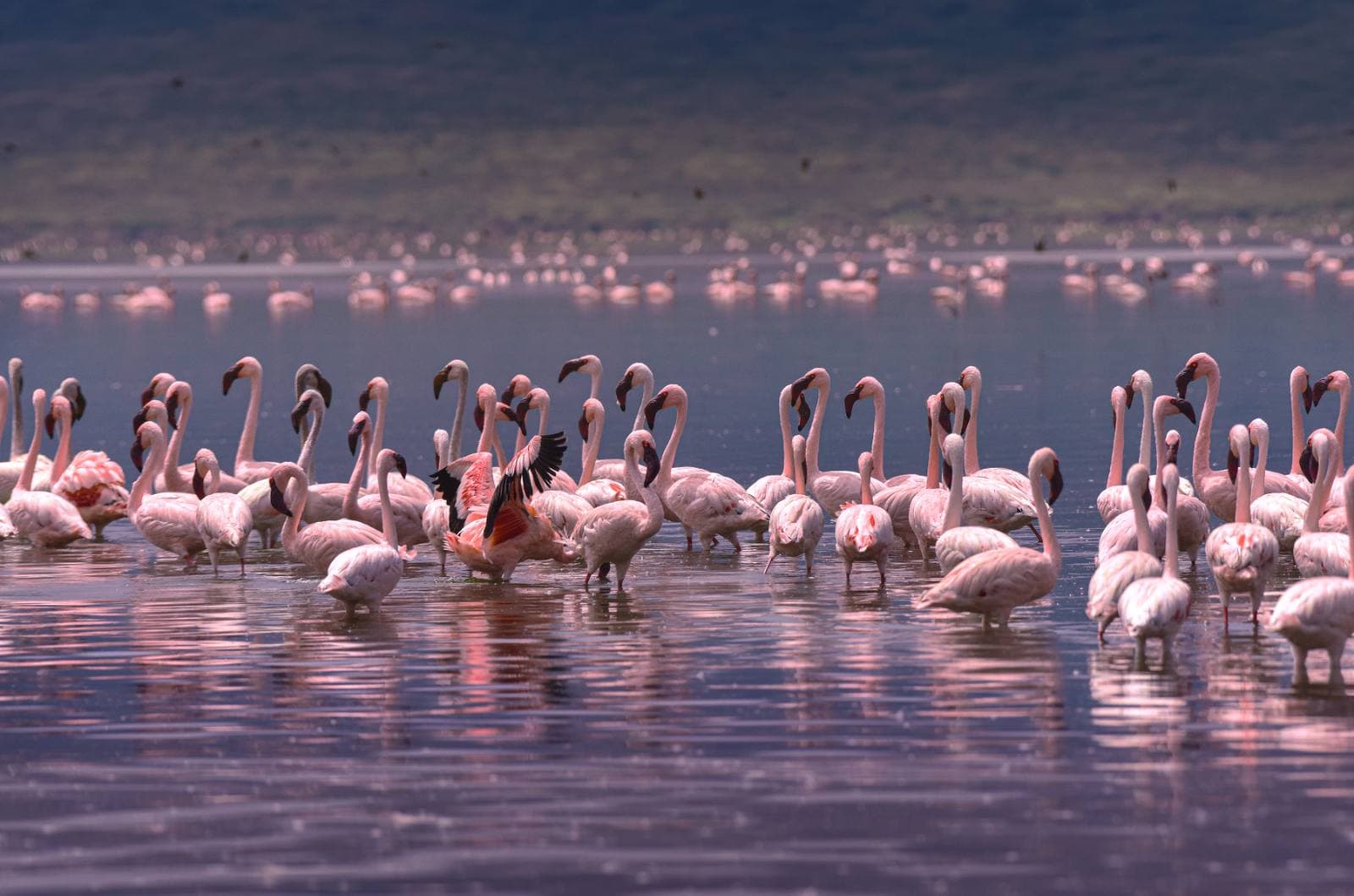
- Walk the lake shore in the early morning or late afternoon, when lesser flamingos are often feeding in the shallows. This is the main breeding ground for East Africa's lesser flamingos; the nests themselves are far out on the mudflats and out of reach.
- Wade and scramble up the Engare Sero gorge to the waterfall, with a local guide. Expect wet feet and some rocks to climb over.
- Climb Ol Doinyo Lengai, the Maasai's Mountain of God and an active volcano, overnight with a guide. Steep and demanding, for fit walkers only.
- Spend time with the Maasai community who live here and guide most of the walks. Visits are arranged with them, and community fees go to the village.
- Look for fossilised human footprints at Engare Sero, preserved in volcanic mud on the lake shore.
The honest version
Natron is hot, often over 35°C by midday, and the wind can carry dust and the smell of the lake. The road is tarmac only to Mto wa Mbu; after that it is gravel and dirt, about four hours from Arusha in all, dusty in the dry season and slow after rain.
Places to stay are a handful of simple tented camps and lodges. Comfortable, but not what you will find in the Serengeti. If you want ease and wildlife on tap, Natron is the stop to leave out.
When to come
June to October is the dry season and the easiest time for the road and the Lengai climb. Flamingo numbers on the shore change from month to month and year to year with the water, so we never plan a visit around a particular count.
How it fits a wider journey
Best as one or two nights between Arusha and the Serengeti on the northern route: Arusha to Natron, then on through Loliondo into the northern or central Serengeti. That onward drive is long and rough, and it saves backtracking through the Crater highlands. It works best on journeys of a week or more, and for travellers who would rather see something different than see more of the same.
Questions travellers actually ask
No one does, up close. The nesting colonies are far out on the mudflats, where neither people nor predators can reach them, which is exactly why the birds breed here. What you can see, in many months, is flamingos feeding along the shore near Engare Sero. Numbers vary a great deal from year to year and month to month.
Very. Lake Natron sits low in the Rift Valley and midday temperatures often pass 35°C. Walks start early, the middle of the day is for shade, and the camps are simple, so it suits travellers who take heat in their stride.
Yes, with a local guide, overnight. The climb starts around midnight to avoid the heat and reaches the rim around dawn after five or six hours of steep, loose ash. It is hard on the legs, harder on the way down, and only for fit walkers. We will tell you honestly whether it suits you.
The first part, past Mto wa Mbu, is tarmac. After that it is gravel and dirt: dusty in the dry season, slow after rain, and rough in places. The drive on to the Serengeti through Loliondo is longer and rougher still. It is part of the experience, but it is not for anyone who hates long days in the vehicle.
Ask about this journey
Send us a few details and a person on the team will reply personally, not a template.
Where the road goes next, and the community you will meet on it.