Long enough to stop planning around highlights. Remote camps, private guiding, and the freedom to spend a whole morning with one sighting.
Private1 / 5
Overview
Built for travellers who have done a safari before and want the version without compromises, or who are travelling a long way once and would rather do it properly than come back. Honeymoons, milestone birthdays and photographers all end up here. It is also the only length at which the southern parks, Ruaha and Nyerere, make sense alongside the north.
At ten days and beyond, the trip stops being a route. You can wait: a lion pride settled under a tree at eleven in the morning is worth returning to at five, and only a long journey lets you make that choice. It also changes where you can stay. The best small camps are remote, hold twelve guests or fewer, and are not worth reaching for a single night.
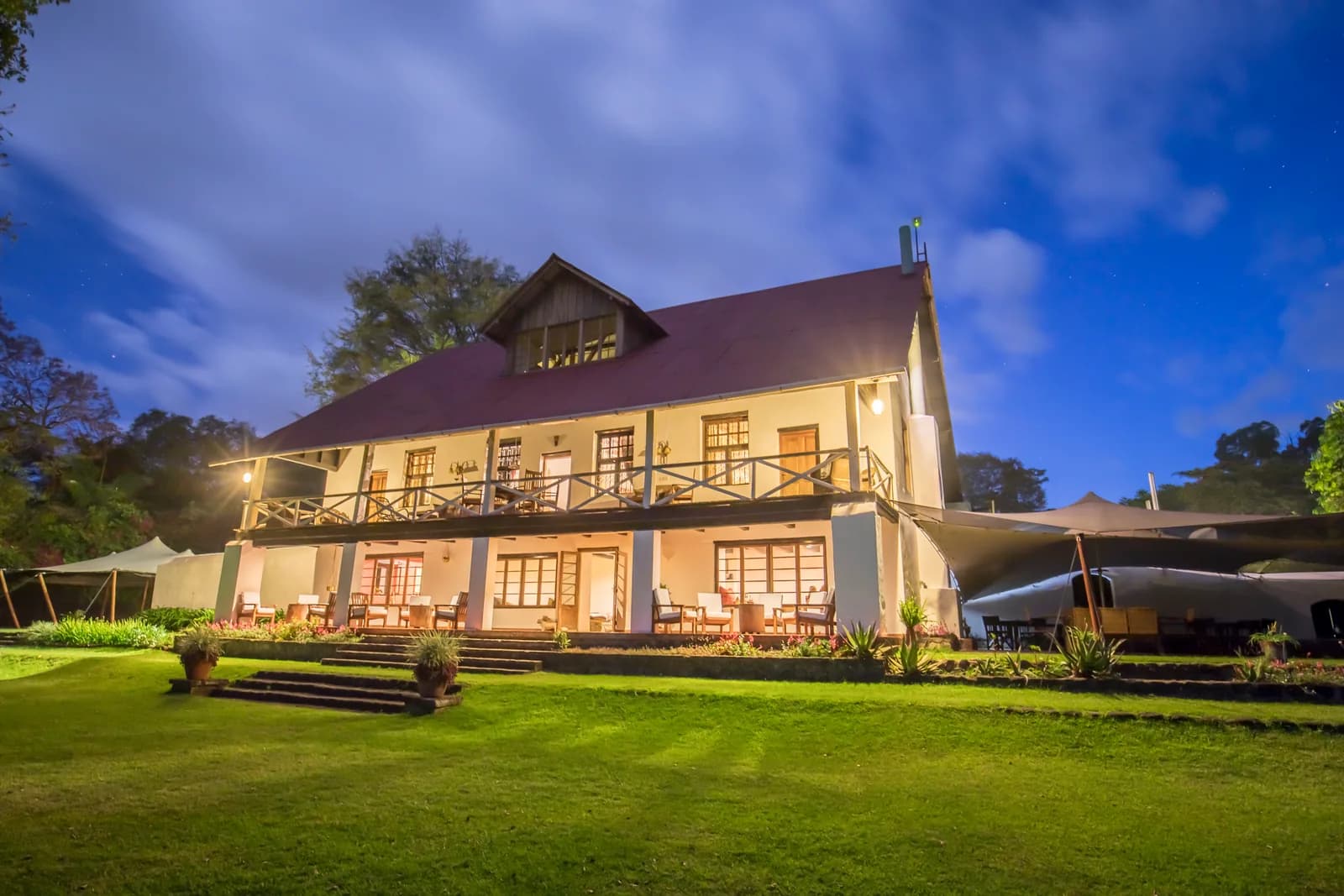
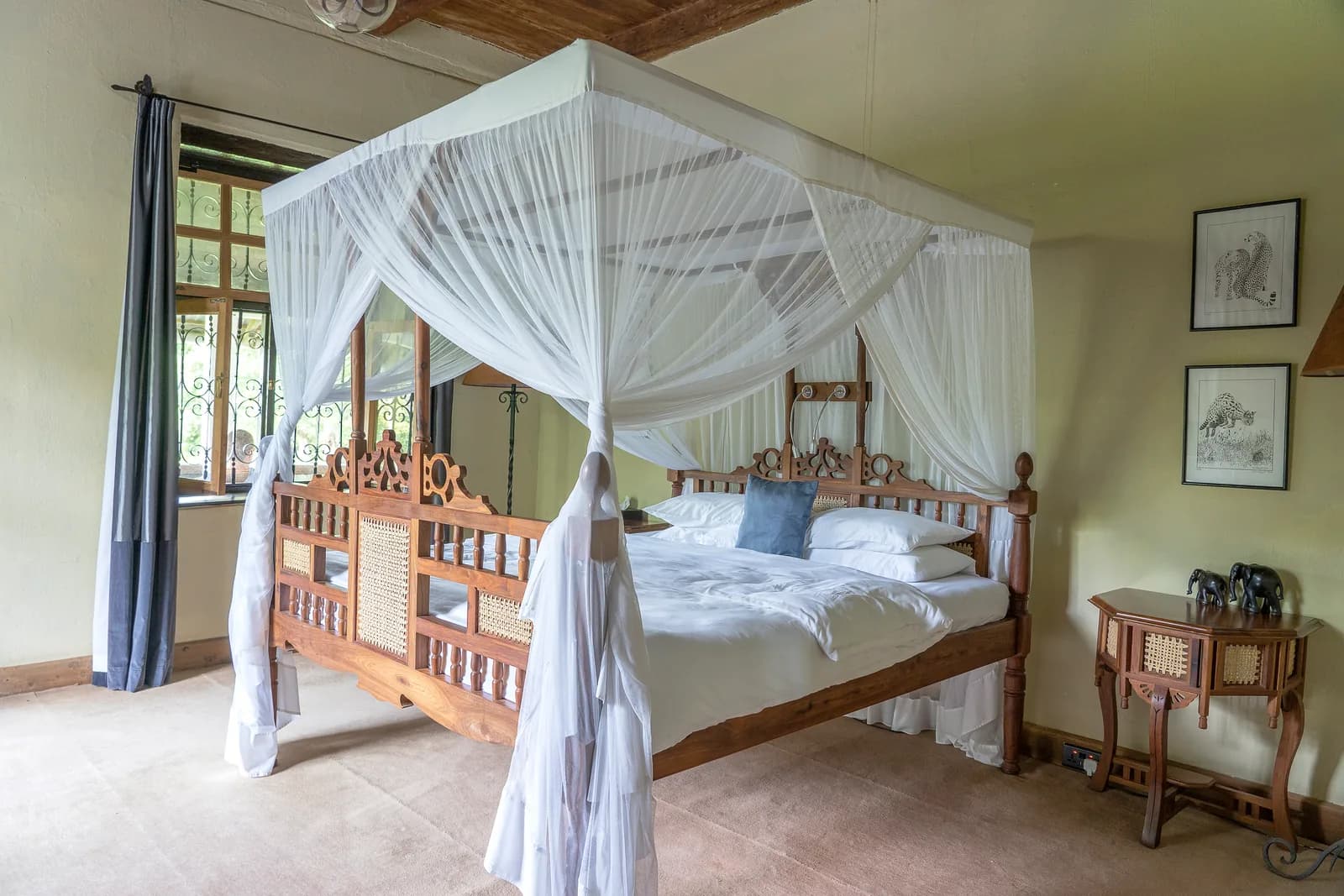
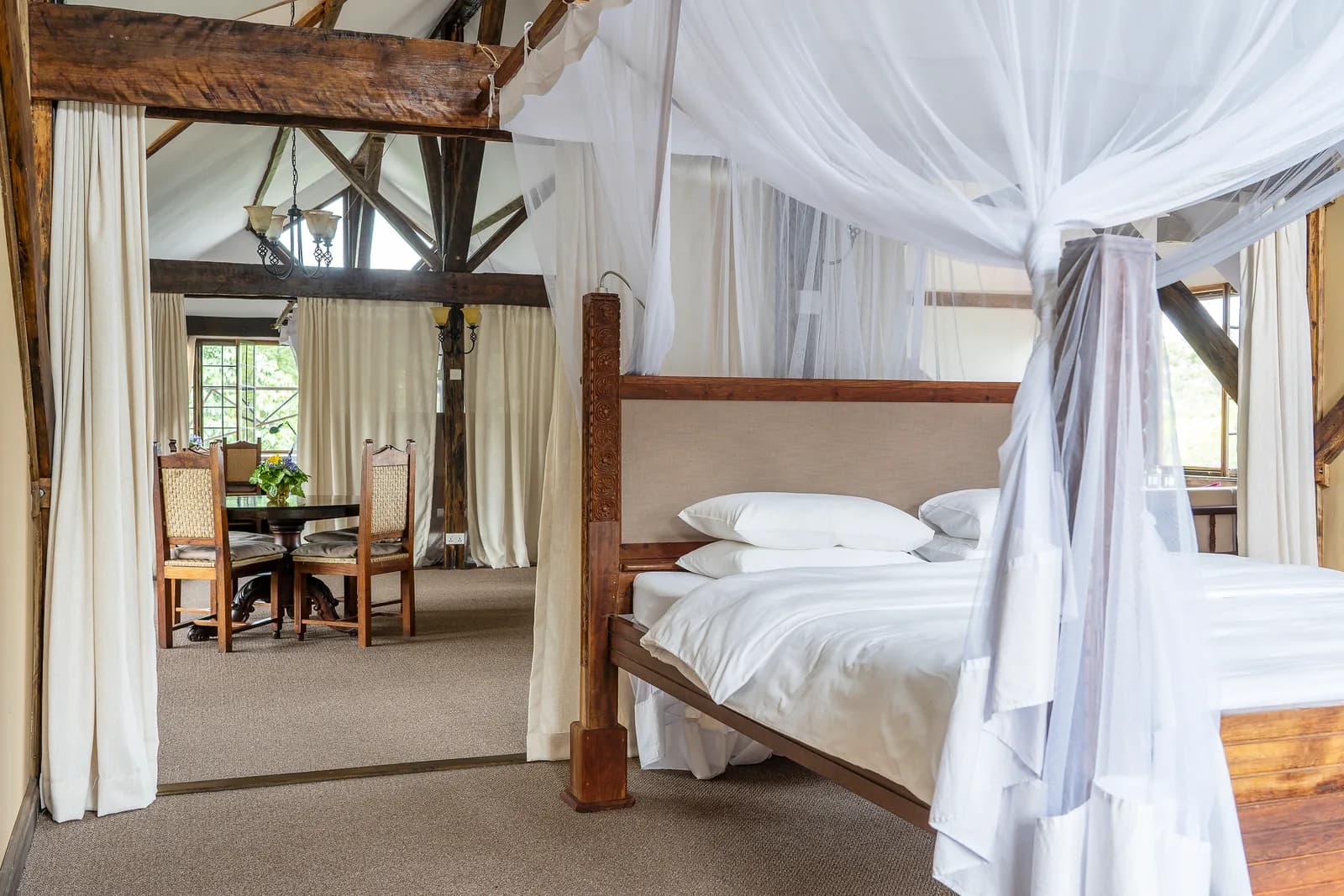
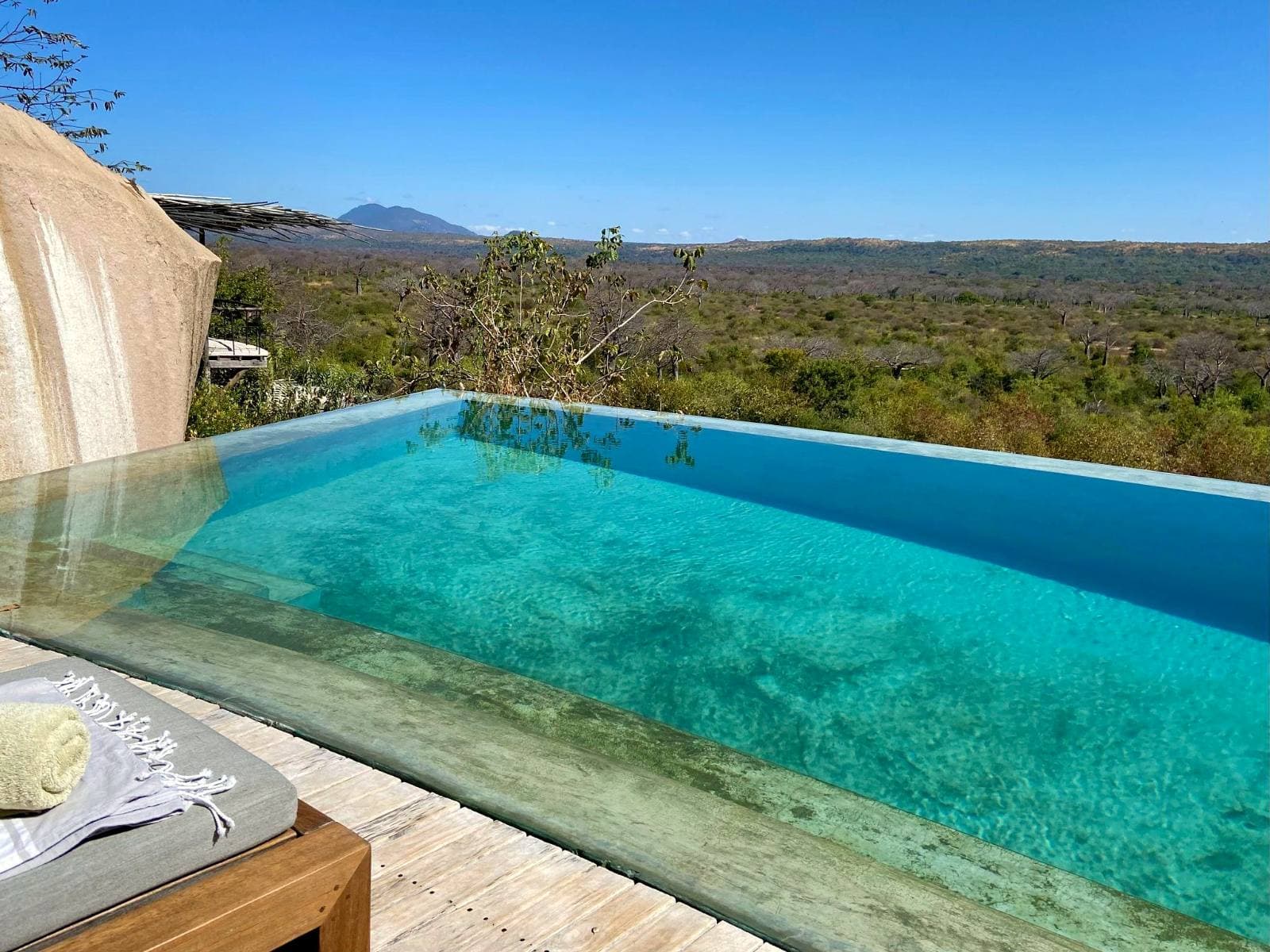
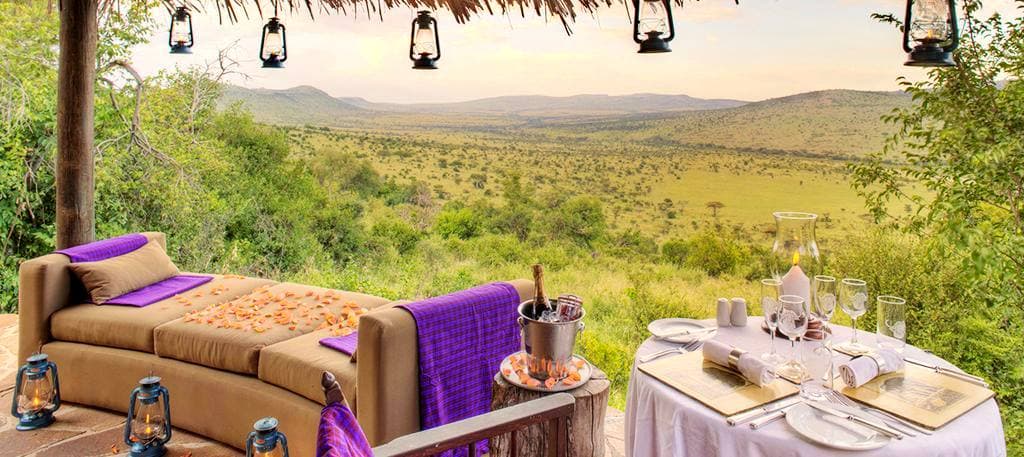
We use the word luxury for the camps and the guiding, not for marble. A tent with a bucket shower in an area with no other vehicles is often a better spend than a large lodge with a spa. If a spa and an infinity pool are what you want, we will book them, and say so plainly.
Highlights
Three or four nights per campThe guiding gets better as the week goes on and your guide learns what you care about.
One guide throughoutA private vehicle and a single guide for the whole journey, not a new one at each lodge.
Remote areas by light aircraftAt least one low-density area, such as the northern Serengeti, the western corridor or Ruaha.
Days out of the vehicleWalking with a ranger, a hide, a fly-camping night or a balloon flight over the plains.
Itinerary
Every eXvo journey is designed around the traveller, so treat this as an illustration of pace and routing rather than a fixed itinerary. Days move, nights get added, whole regions get swapped.
These are examples, and every journey can use any of them. Final choice depends on availability on your dates.
Met at Kilimanjaro International Airport by your guide and driven about an hour to your lodge outside Arusha. Nothing else is planned: the rest of the day is for getting over the flight.
Meal plan: B&BB&B: breakfast only. Half board: breakfast and dinner. Full board: breakfast, lunch and dinner (on safari, lunch is often a picnic in the park).
A small park on the slopes of Mount Meru, under an hour from Arusha, with forest, crater lakes and open glades. It is one of the few northern parks where you can walk with an armed ranger.
Today
A slow first full day to get over the flight: rest at the lodge, or an optional short drive or walk in Arusha National Park, and an early night.
Meal plan: B&BB&B: breakfast only. Half board: breakfast and dinner. Full board: breakfast, lunch and dinner (on safari, lunch is often a picnic in the park).
About Tarangire
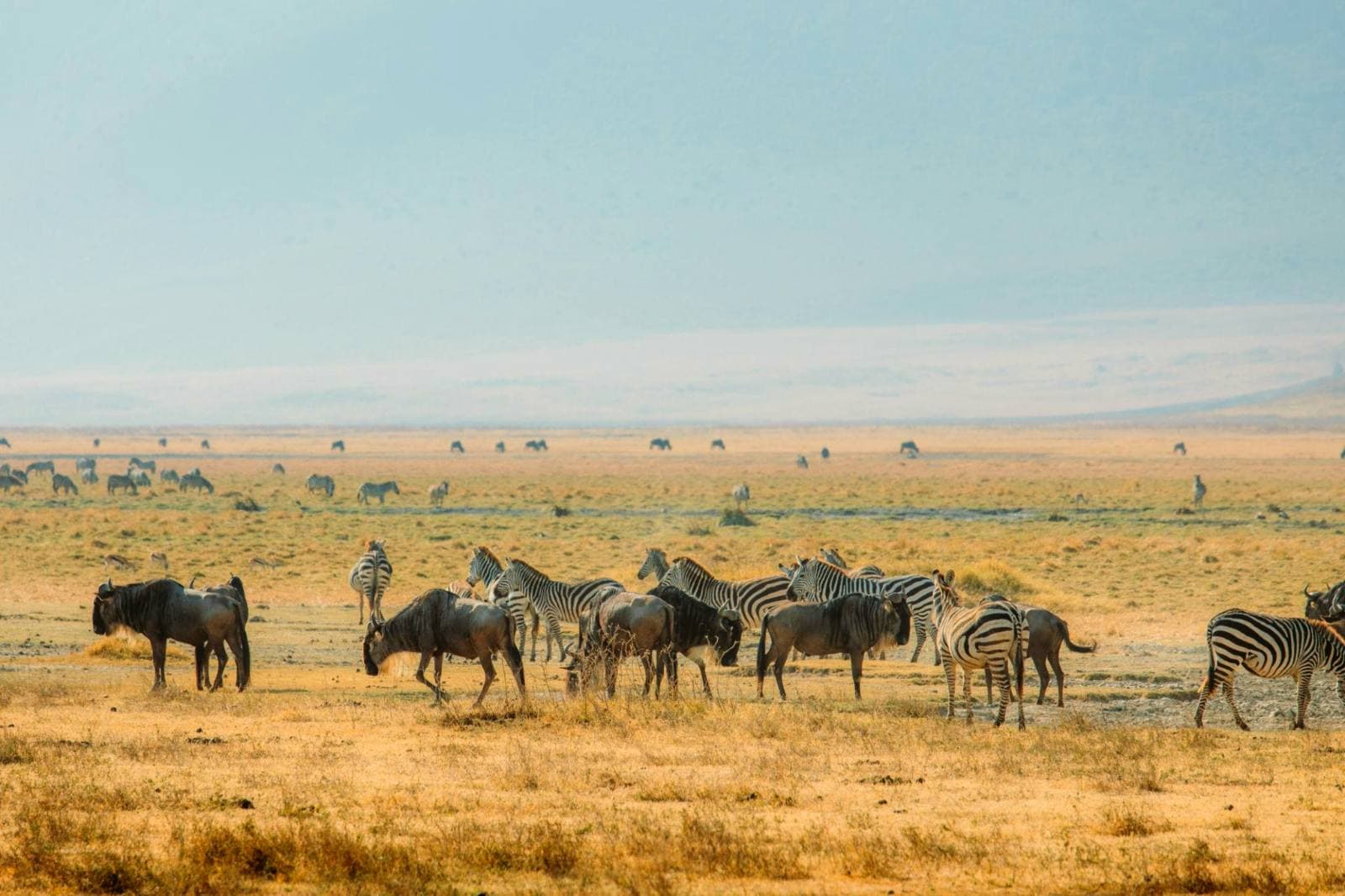
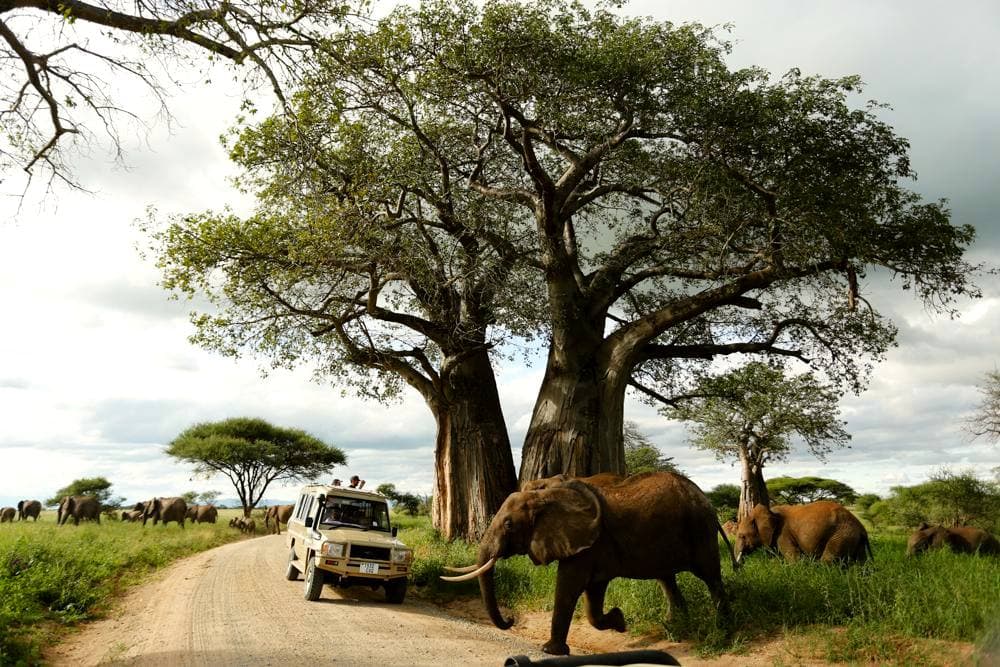
Tarangire is a park of baobabs and seasonal swamps along the Tarangire River, about two hours from Arusha. In the dry months the river is the main water for a wide area, so animals tend to gather along it, and it sees far fewer vehicles than the Serengeti.
Day 3
About two hours to Tarangire and into the park by late morning, with a picnic lunch and a first afternoon drive along the river.
Day 4
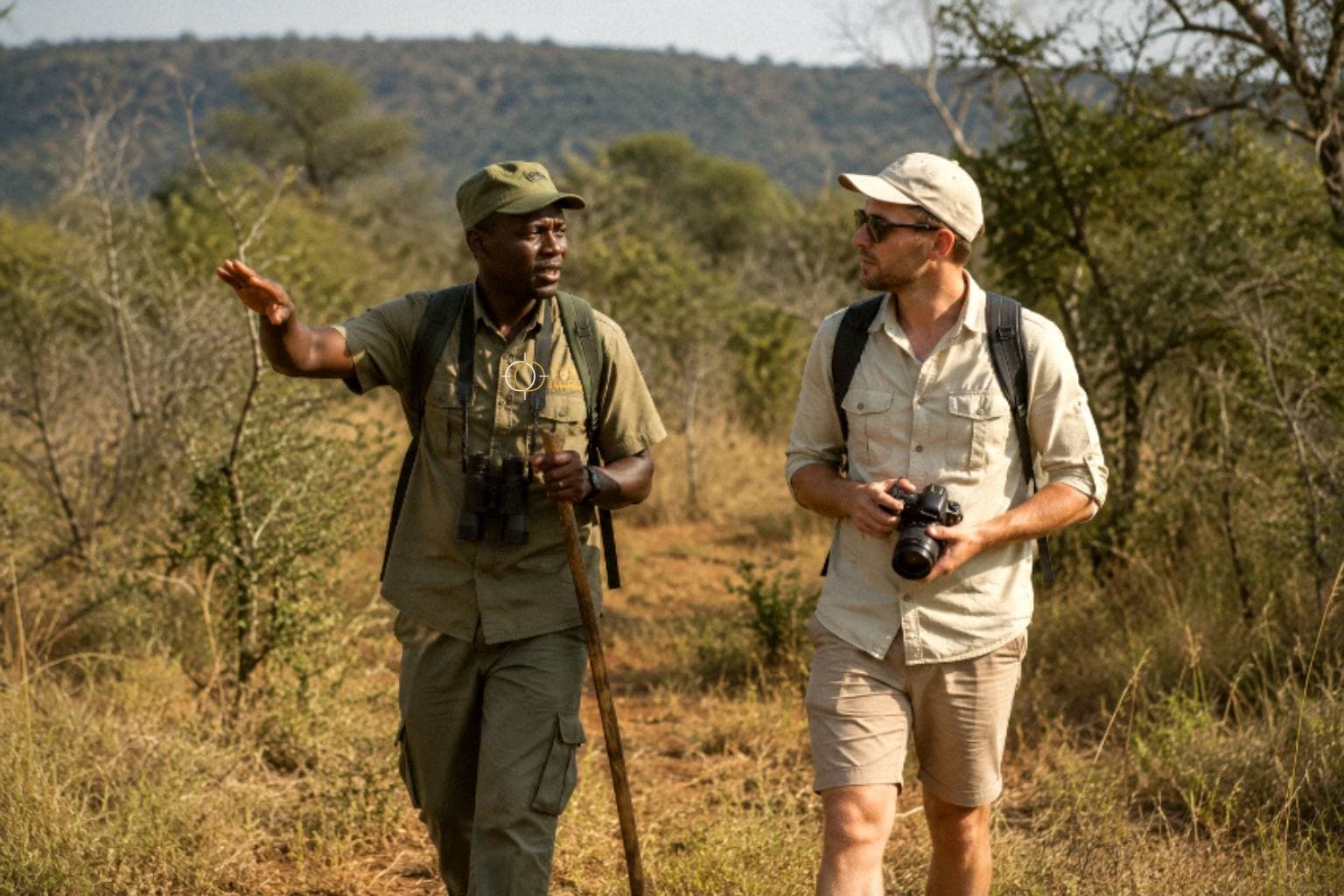
A morning on foot with an armed ranger, where your camp's area allows walking, then lunch at camp and an afternoon drive.
Day 5
A full day along the river with a packed lunch, as far south as the swamps if the season suits, back to camp at dusk.
Meal plan: Full boardB&B: breakfast only. Half board: breakfast and dinner. Full board: breakfast, lunch and dinner (on safari, lunch is often a picnic in the park).
About the Serengeti
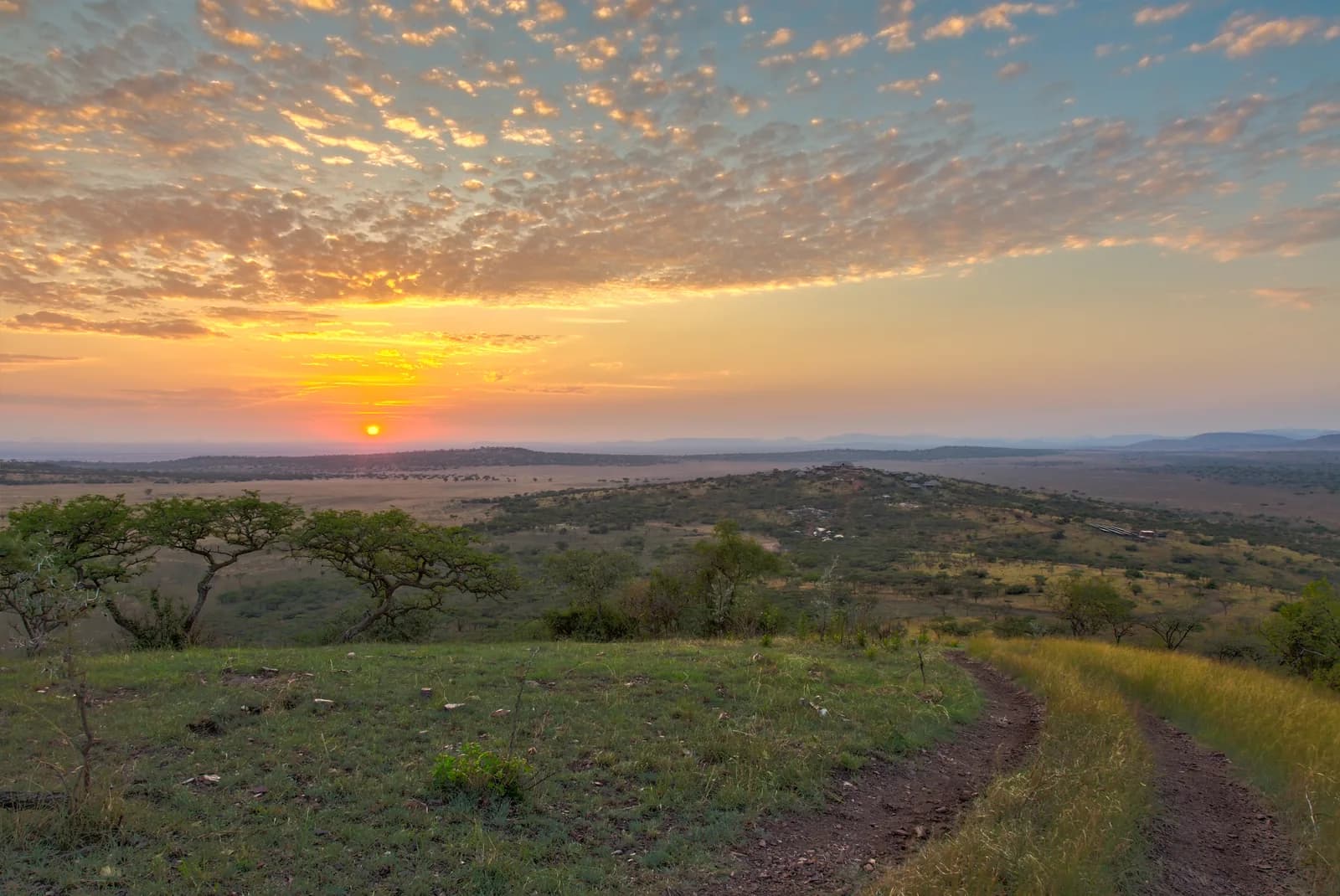
The Serengeti covers almost 15,000 km² of grassland, rocky kopjes and river woodland, running north to the Kenyan border. The great herds move with the rains, which is why where you stay inside it depends on the month.
Day 6
A short flight from Tarangire into the Serengeti, met at the airstrip by your guide, and an afternoon drive on the way to camp. One camp for four nights, deliberately, chosen for the month.
Day 7
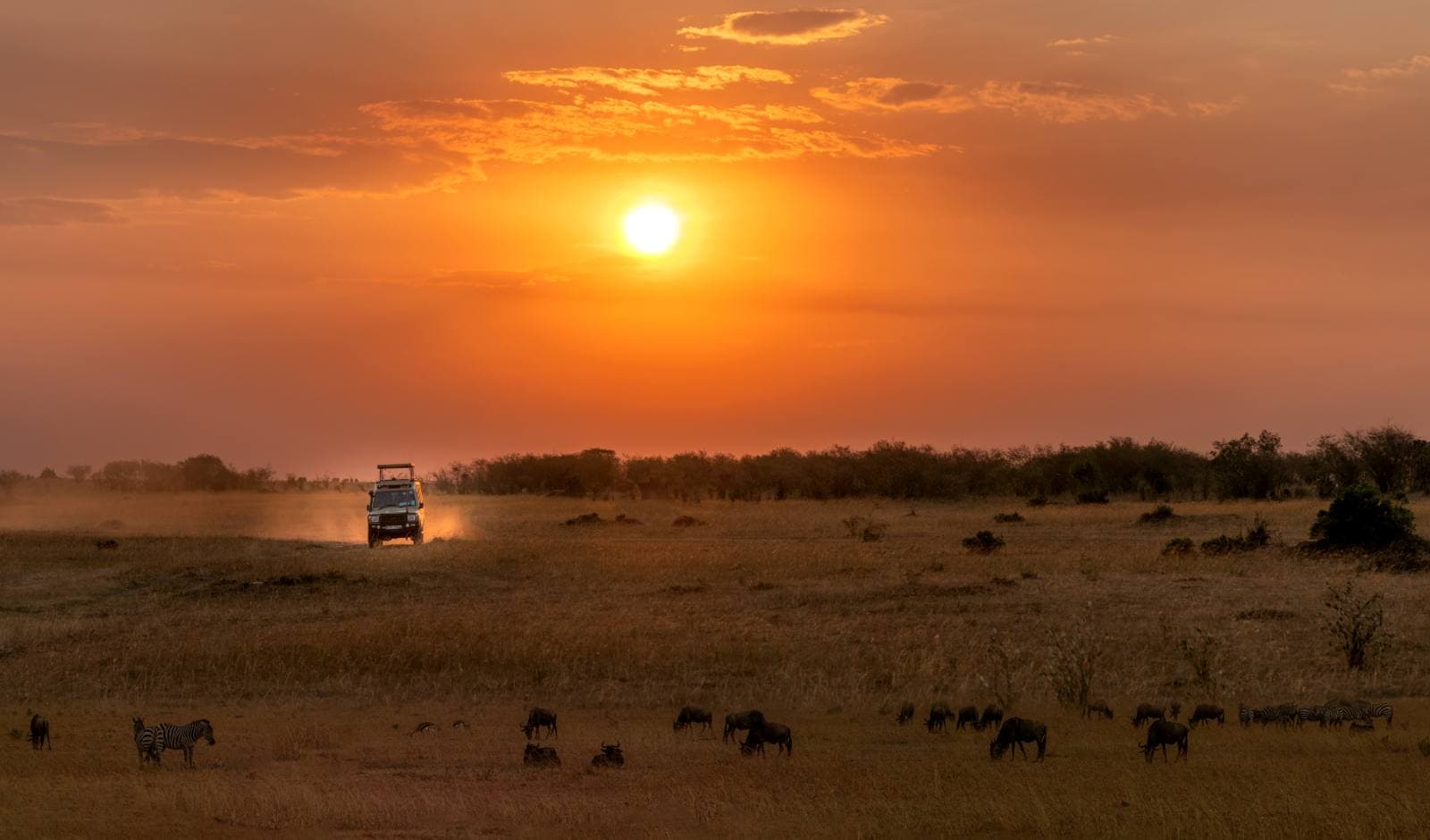
A full day on the plains. Your guide plans it around the season and around what other guides are reporting; you decide how long to stay with anything you find.
Day 8
A day shaped around you: a dawn balloon flight if you would like one (an extra), a long drive with a packed lunch, or a quiet day at camp.
Day 9
A last full day on the plains. By now your guide knows what you want more of and how long you like to wait for it.
Meal plan: Full boardB&B: breakfast only. Half board: breakfast and dinner. Full board: breakfast, lunch and dinner (on safari, lunch is often a picnic in the park).
About Ngorongoro
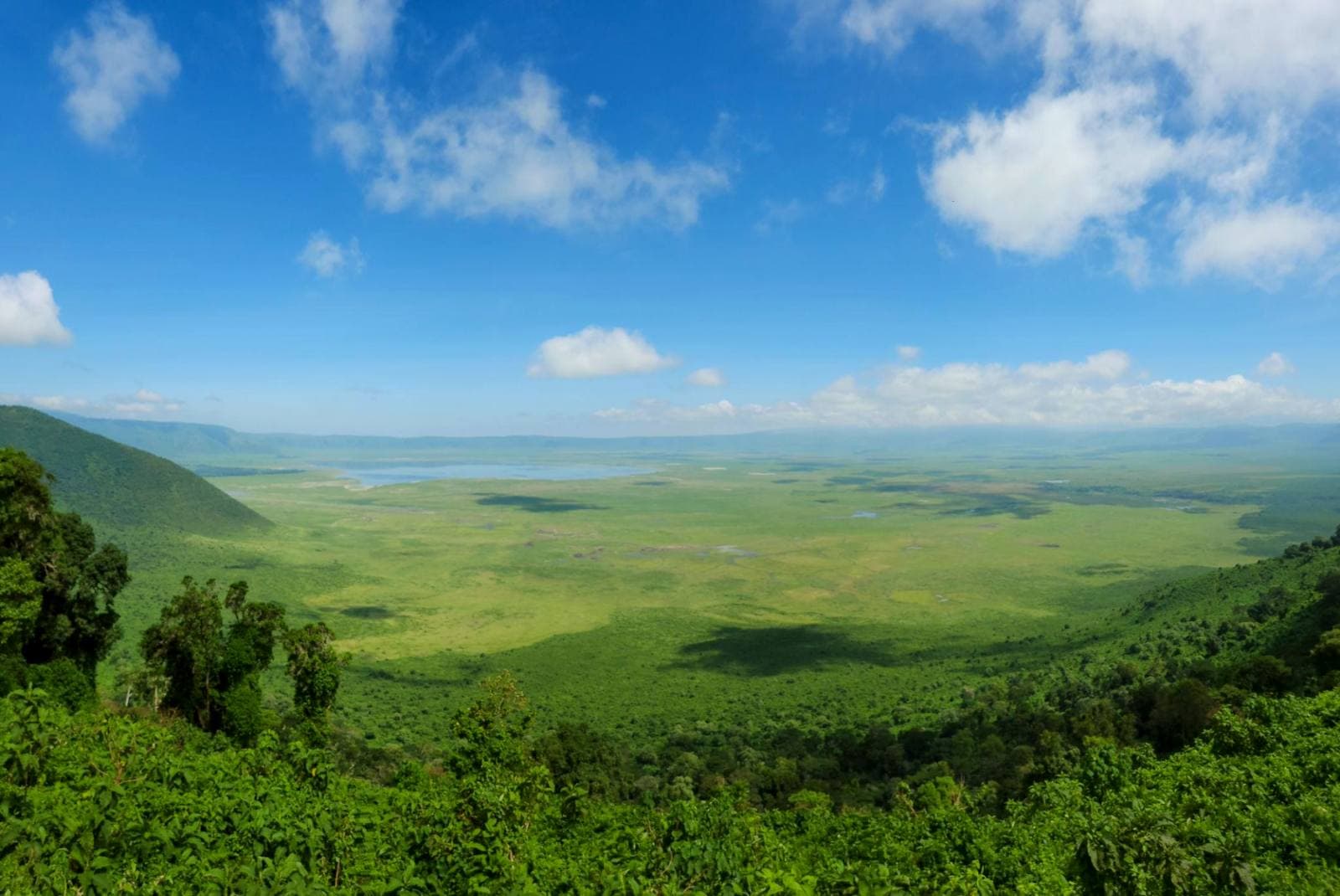
The Ngorongoro Crater is the collapsed caldera of an old volcano, about 19 km across and 600 m deep, inside a wider conservation area where Maasai still graze their cattle. Vehicles go down to the floor for the day and come back up to the rim by late afternoon.
Day 10
Out of the Serengeti and up into the highlands to the Crater rim. In the afternoon, a visit hosted by a Maasai family where visits are welcome, arranged and paid directly to the community.
Day 11
An early descent to the Crater floor, ahead of most vehicles, with a picnic lunch down there, and back up to the rim by late afternoon.
Meal plan: Full boardB&B: breakfast only. Half board: breakfast and dinner. Full board: breakfast, lunch and dinner (on safari, lunch is often a picnic in the park).
About Zanzibar
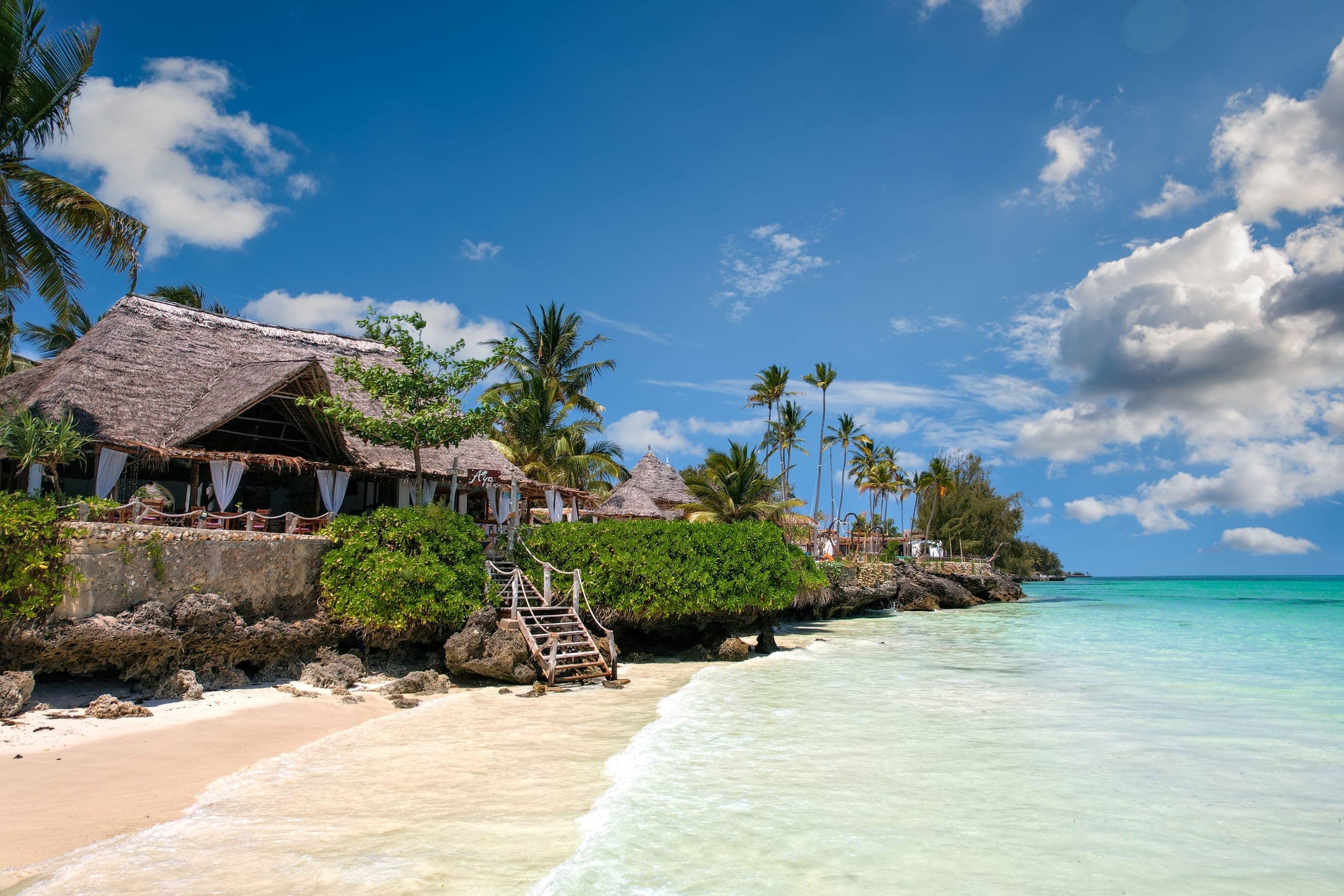
Zanzibar is an island off the coast, about an hour's flight from Arusha, with Stone Town's old streets on the west side and long white beaches to the north and east.
Day 12
A short drive to Manyara airstrip and a flight either to Zanzibar, to wind down on the coast, or south to Ruaha, for a very different and much emptier park.
Day 13
A full day: the beach, the reef or Stone Town on the coast, or game drives and walks with Ruaha's guides in the south.
Nights 12–13 | Accommodation
Comfort
Comfort in Zanzibar: on request. Tell us what you have in mind and we’ll suggest options.
What your price covers, and what to budget for separately.
Included
Every park entry, conservation and Crater fee on the route, paid by us in advance. They are a large share of what a safari costs, and they are what fund the parks.
The lodges for the level you choose, with the meal plan shown on each day of the itinerary: full board on safari, and bed and breakfast or half board in town and on the coast. Prices assume two sharing; a room to yourself costs more, and the supplement is in your quote.
A 4x4 with a pop-up roof, used by your party alone and never shared. One English-speaking driver-guide stays with you from the first game drive to the last.
Met at Kilimanjaro airport when you land, and taken to your flight home at the end, whatever time it leaves.
Water in the vehicle on every safari day, so you never have to ration it on a long drive.
Light-aircraft flights between regions where the route flies, such as into the Serengeti or down to Ruaha.
A guided walk in Tarangire with an armed ranger, as listed. It is why the minimum age for this journey is 12.
Not included
International flights. Flights to and from Tanzania are booked by you. We will suggest arrival and departure times that fit the trip.
Visa. Paid by you, usually online before you travel. Visa information
Travel insurance. A condition of travelling with us. It must cover medical treatment, emergency evacuation and repatriation.
Tips. Always your choice. As a guide, we suggest $30–50 per day per vehicle for your driver-guide, plus a little for camp staff. How tipping works
Personal spending. Drinks beyond water and what the camp serves with meals, laundry where it is charged, souvenirs, and optional extras such as balloon flights, quoted separately if you want them.
Packing
Less than you think, in neutral colours, and in a soft bag if any leg is flown. Bring a warm layer: early mornings in an open vehicle are cold, even when the middle of the day is hot.
Most nationalities need a visa: $50 for a single entry. US citizens pay $100 for a multiple-entry visa. Apply online before you travel to avoid the queue on arrival. Fees and rules change, so check with the Tanzanian embassy in your country.
Not if you break it. Ten to fourteen days of pure game driving is tiring; the same length split across two ecosystems, or safari plus coast, is not. That is why we build in a change of landscape.
Only at this length. Ruaha and Nyerere are wilder, emptier and require flights, which makes them poor value on a shorter trip and excellent value on a long one.
Twelve months for June to October. The small camps this journey depends on hold very few rooms and the good guides are booked a season ahead.
Frequently is. Tell us early. Camps handle it well, and a private vehicle plus a remote camp is the part that actually matters.
Quick enquiry
Ask about this journey
Send us a few details and a person on the team will reply personally, not a template.
Where to go next
The places and experiences that fill the extra days.
 Private1 / 5