Ngorongoro
A collapsed volcanic caldera holding some of the densest wildlife on the continent and, by the middle of the morning, a good number of vehicles.
What it is
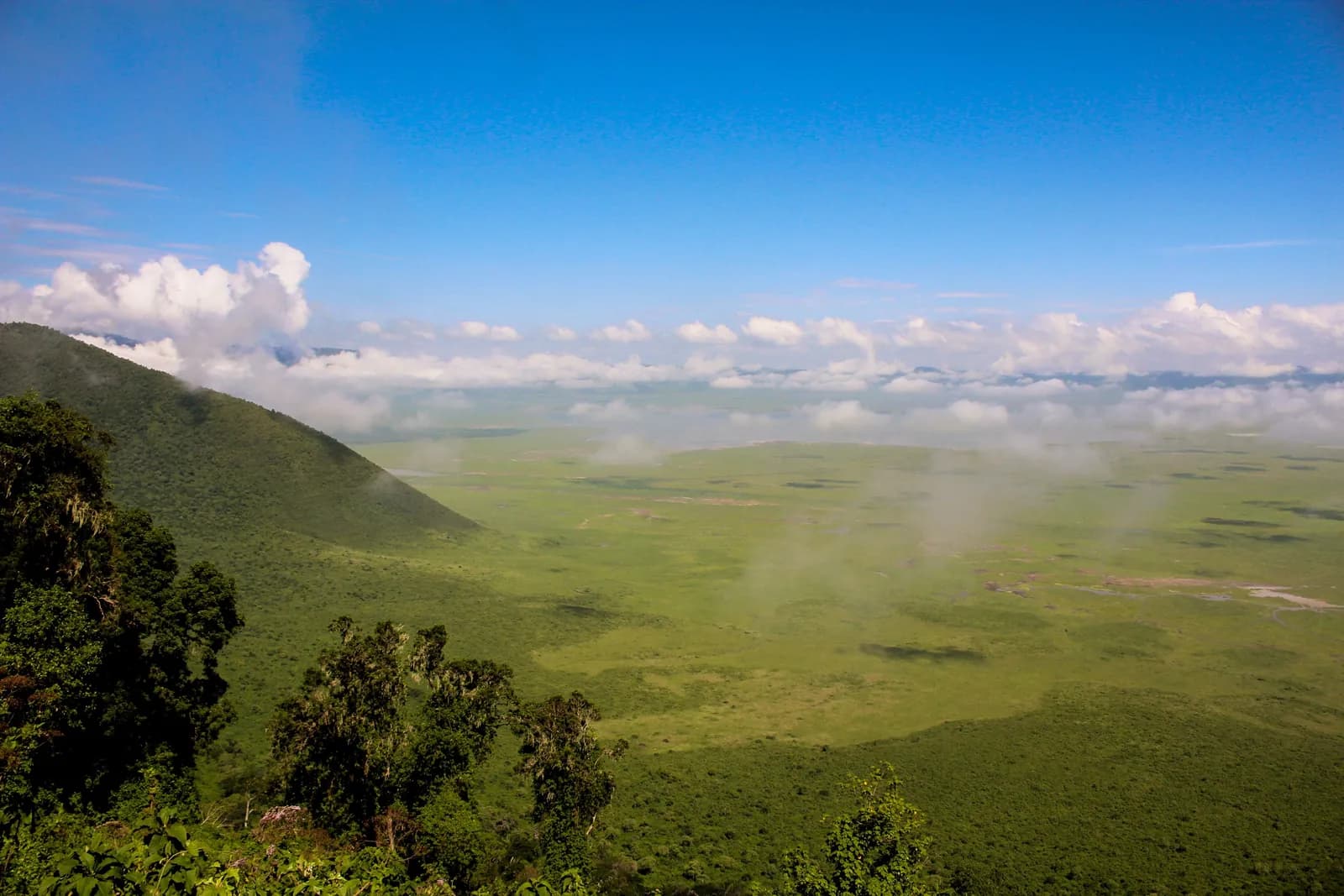
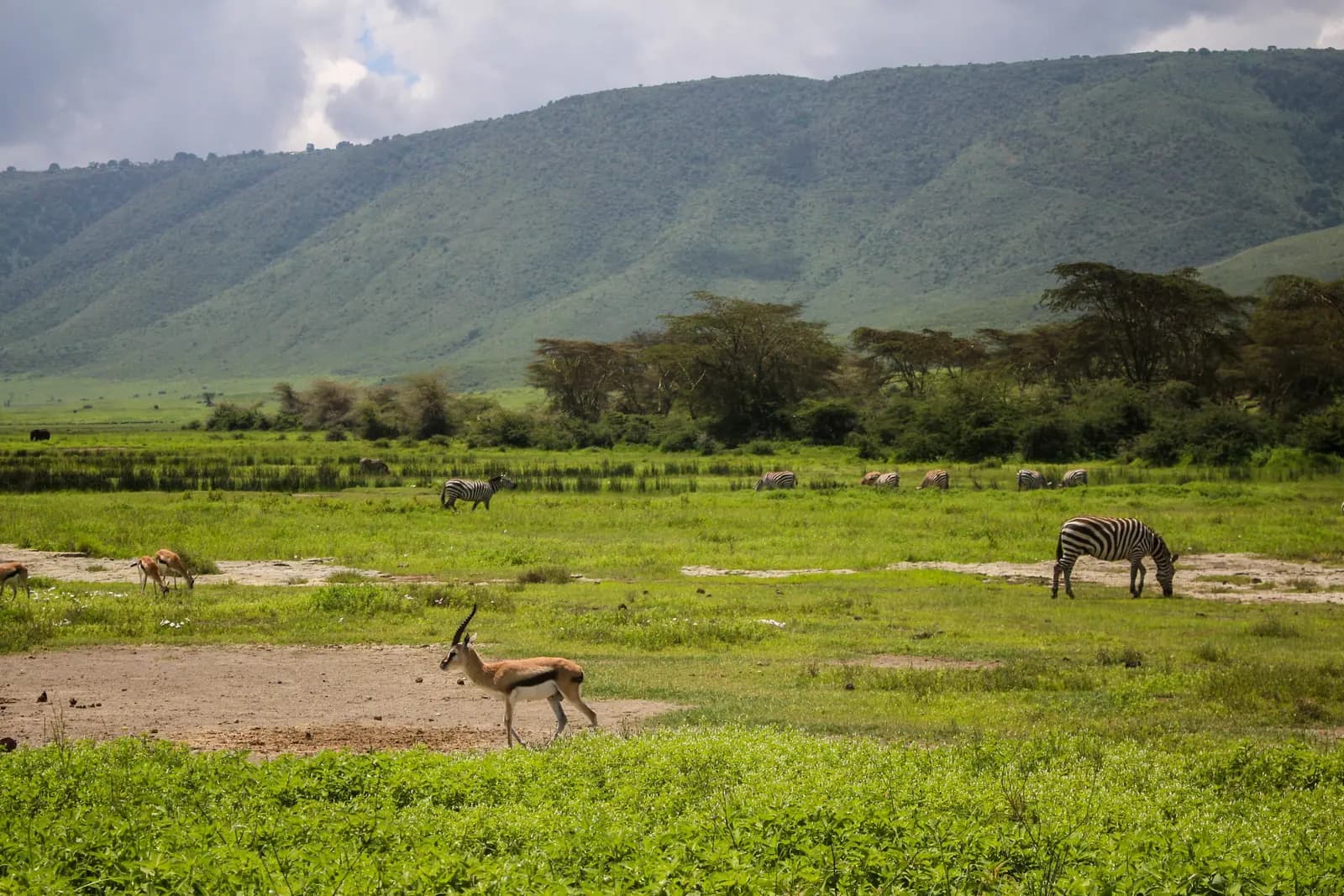
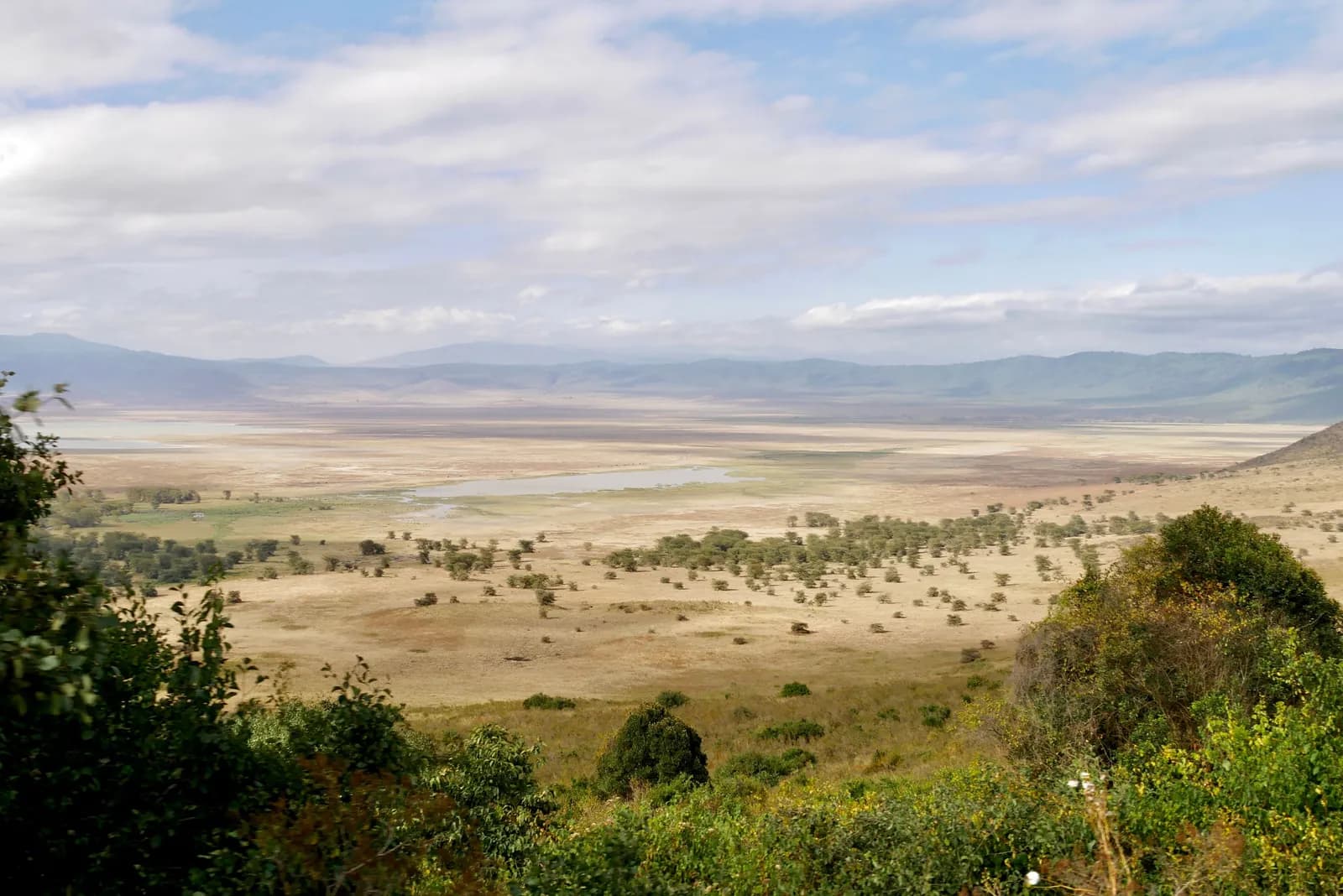
Two and a half million years ago a volcano the size of Kilimanjaro collapsed inward. What remains is a caldera twenty kilometres across with walls six hundred metres high, and a floor of grassland, soda lake, forest and swamp that supports around twenty-five thousand large animals permanently.
Because the animals largely stay, Ngorongoro is the least seasonal place in northern Tanzania. It is the one park where a single day is genuinely enough, and where that day is unusually reliable.
Wildlife
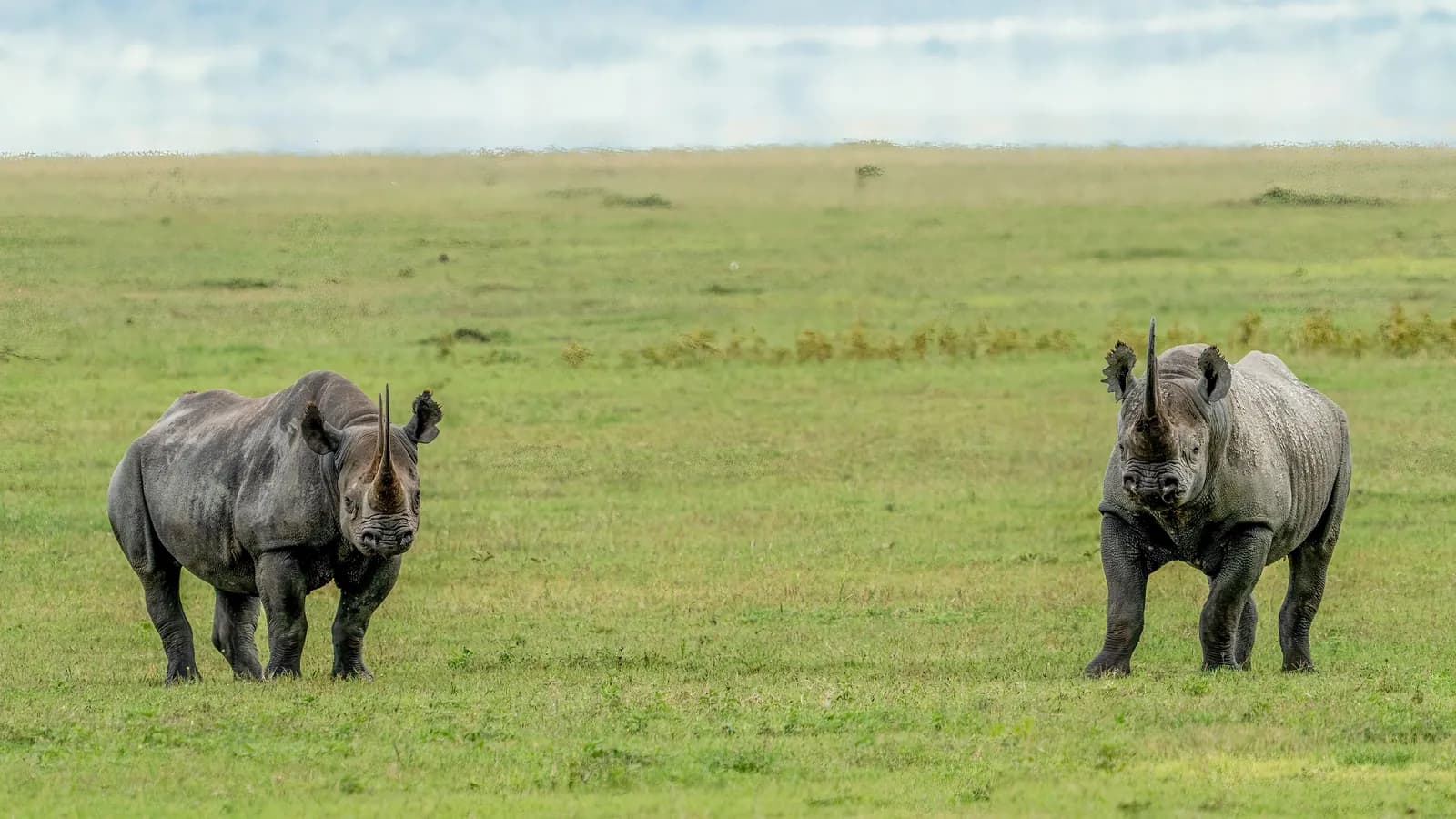
- One of the last places in Tanzania with a realistic chance of black rhino, though never a guarantee.
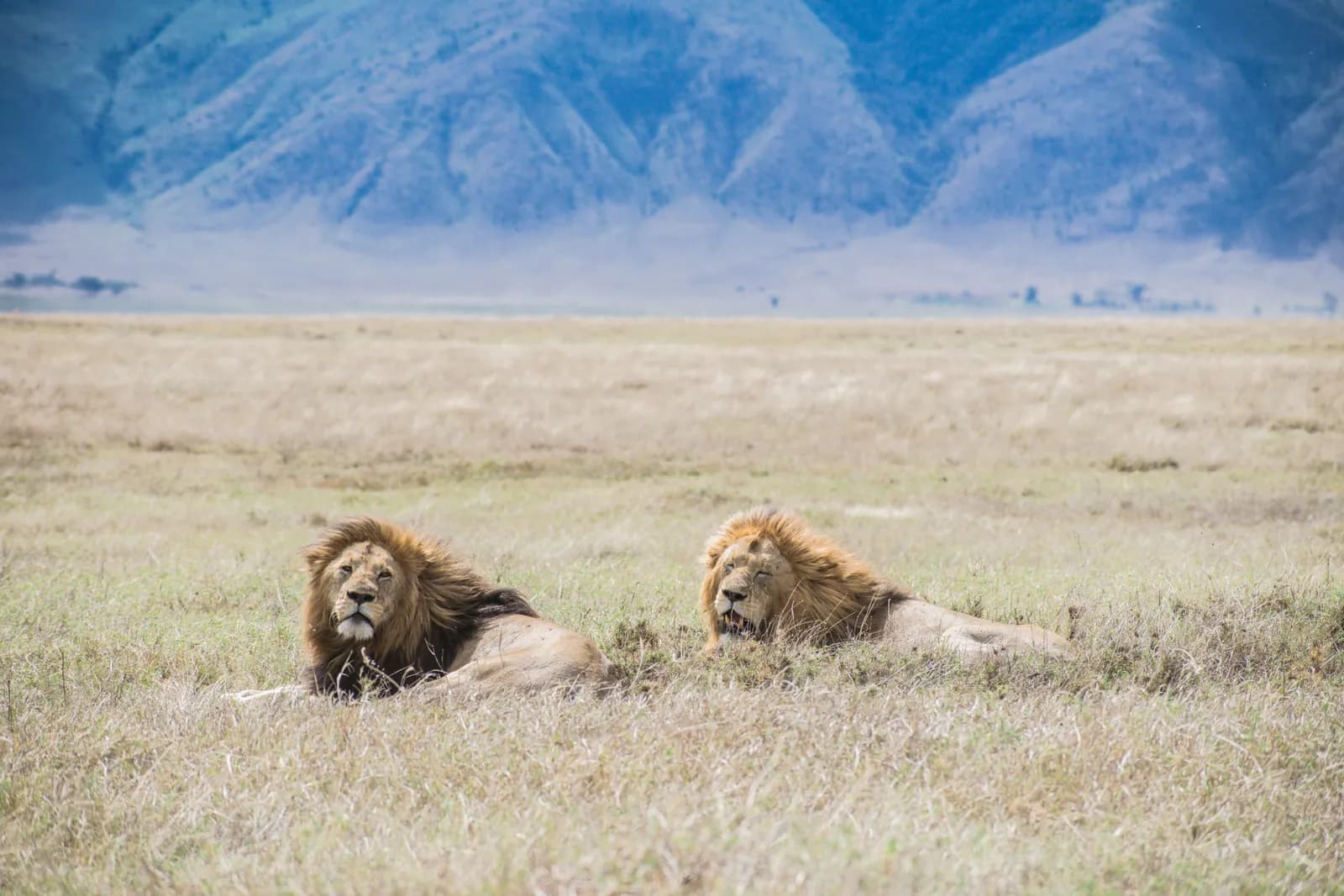
- Lion at very high density, including prides habituated to vehicles.
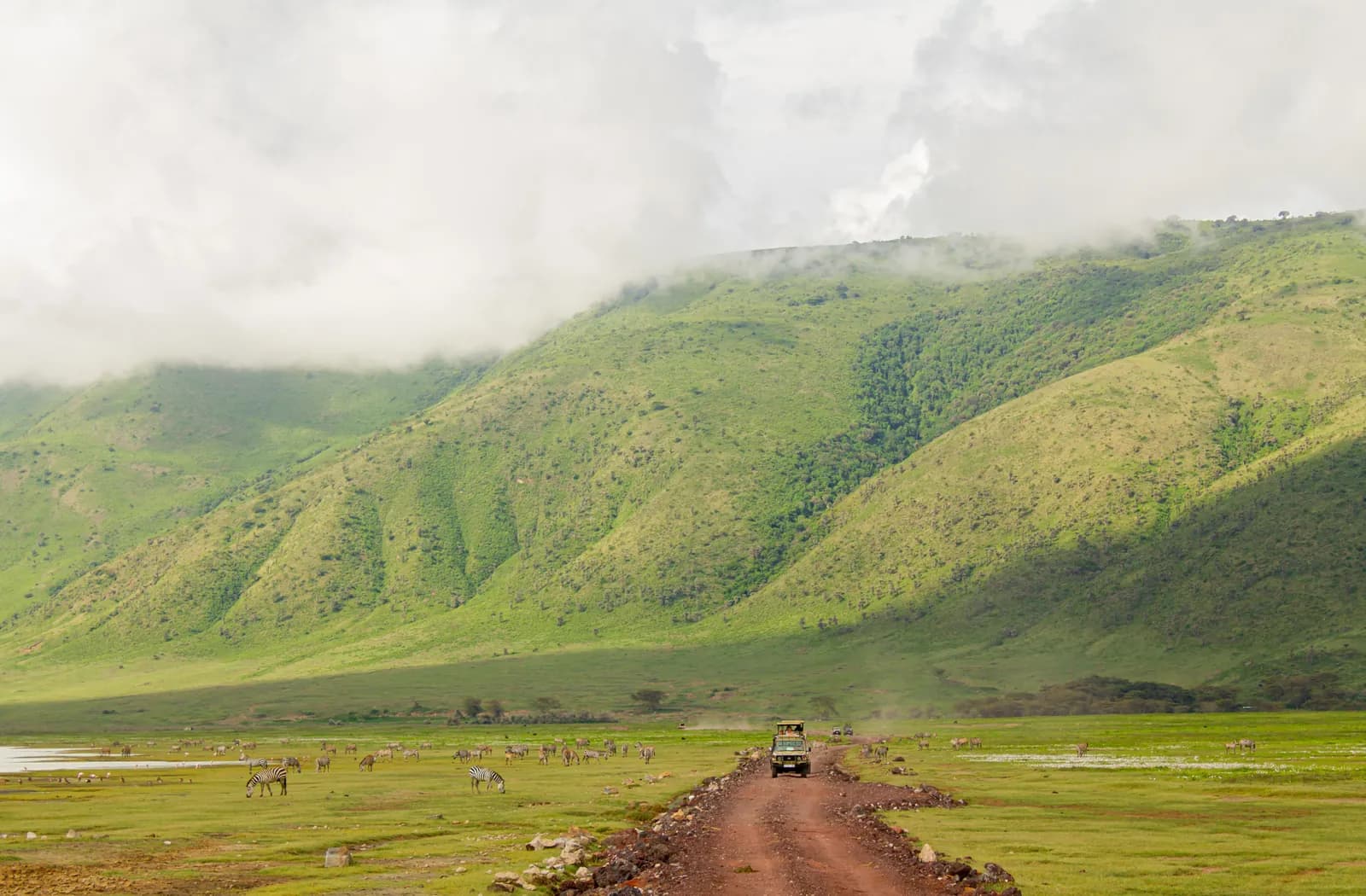
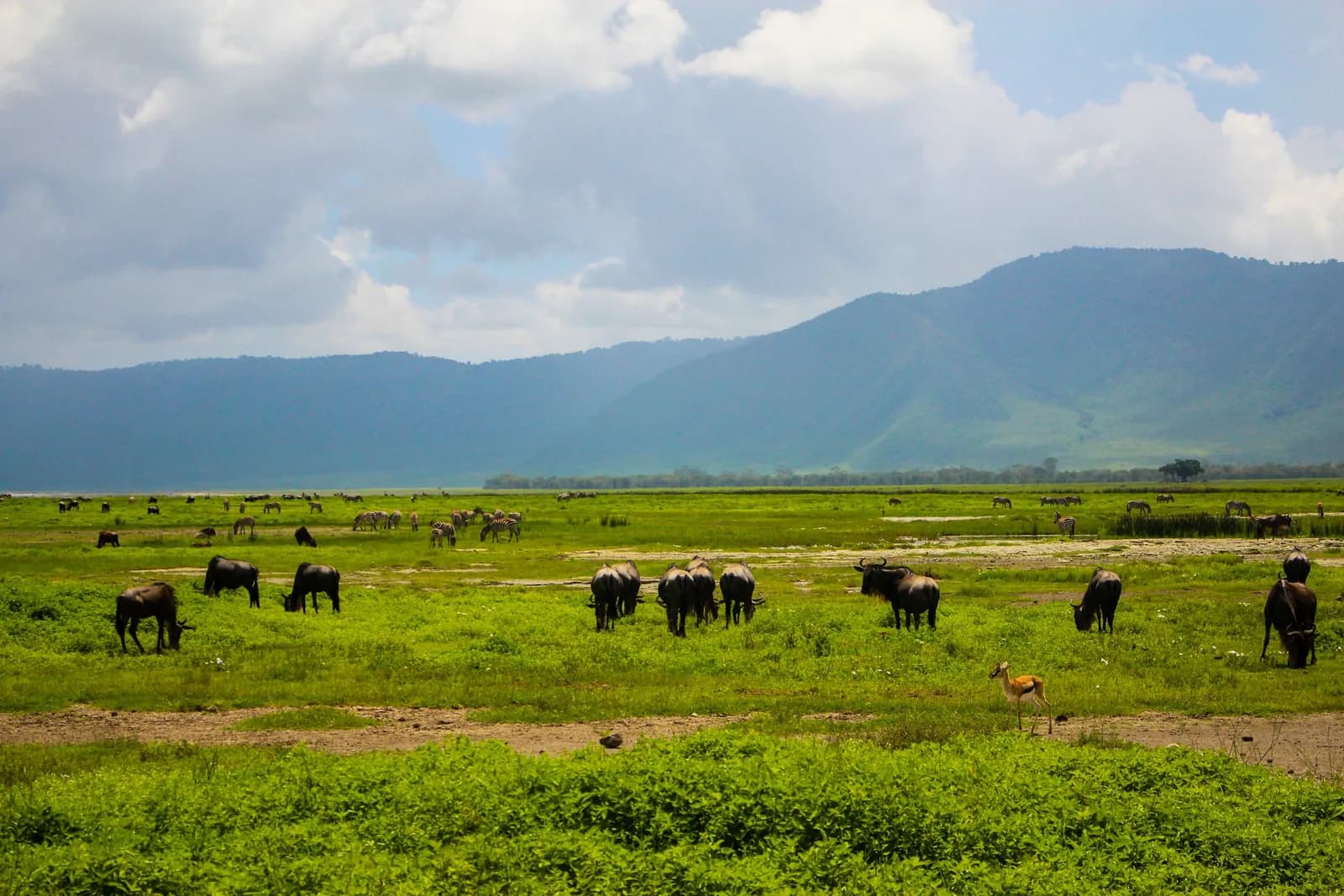
- Enormous buffalo and wildebeest numbers on the crater floor year-round.
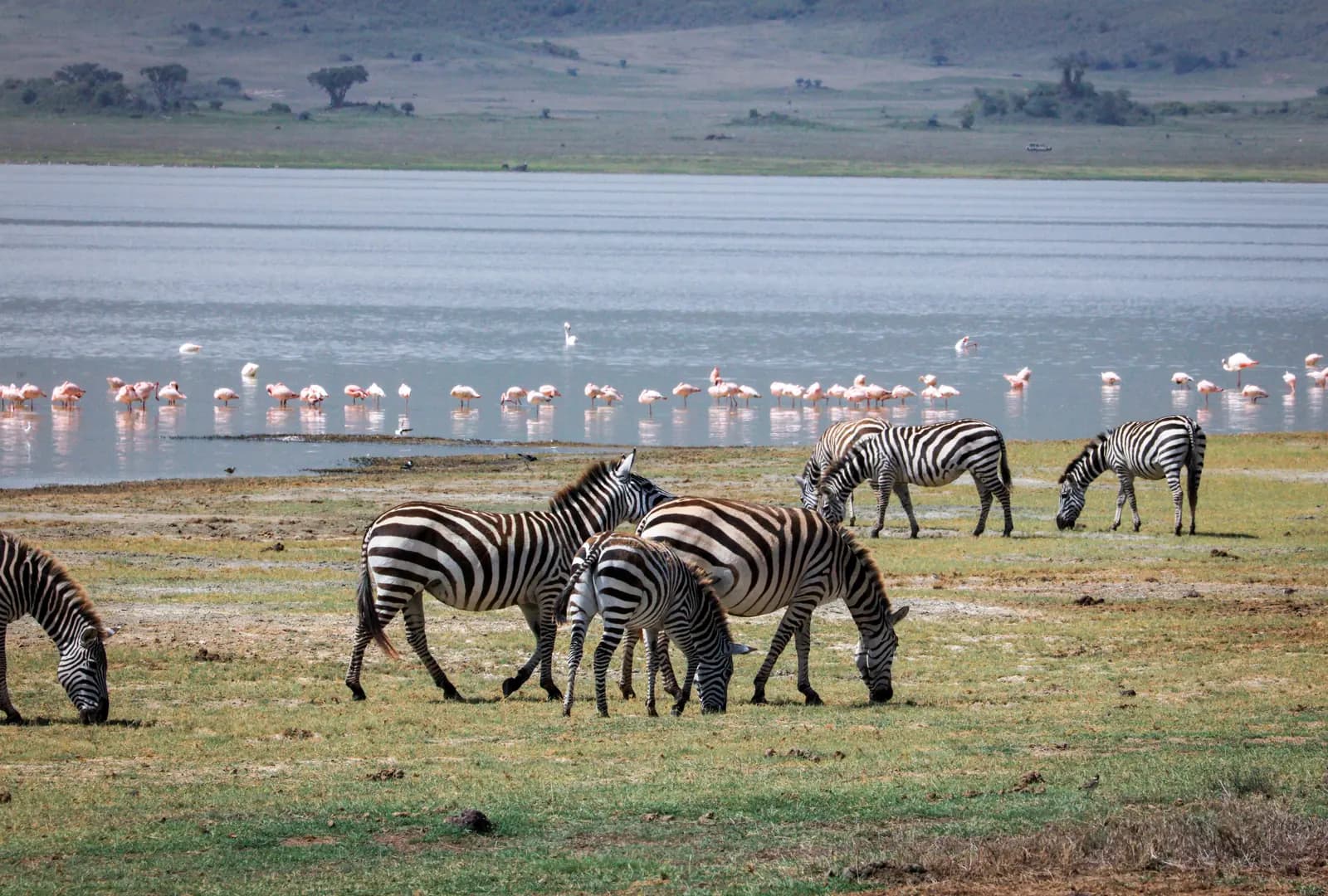
- Flamingo on Lake Magadi when water levels suit, sometimes in thousands.
- Elephant on the rim and in Lerai Forest: old bulls with notably large tusks.
- Cheetah and leopard present but far less reliable than on the Serengeti plains.
The crowding problem, and what to do about it
This is the busiest place we send travellers, and we would rather say so. Descent roads open early, the floor is small, and by ten in the morning a good sighting can attract twenty vehicles.
The fix is entirely about timing. We stay on the rim the night before, descend as the gate opens, and are on the floor for the first two hours when it is quiet and the light is best. We leave around midday as the day-trippers from Arusha arrive. Travellers who do the reverse, arriving late morning from Arusha, see the same crater and a very different experience.
Beyond the crater floor
The wider Ngorongoro Conservation Area is much larger than the caldera and far emptier. The Empakaai and Olmoti craters can be walked, the highlands hold Maasai communities who receive visitors on their own terms, and Olduvai Gorge sits on the road toward the Serengeti. On a two-night stay these are what fill the second day.
How it fits a wider journey
Ngorongoro sits between Arusha and the Serengeti, which makes it a natural stop in either direction rather than a detour. On short journeys it is the single highest-value day available. On longer ones we usually place it at the end, driving out of the Serengeti and back toward Arusha.
Gallery
Questions travellers actually ask
Possibly. Ngorongoro holds a small black rhino population and they are seen regularly but not daily, often at distance across the floor. Anyone promising rhino is guessing.
For the crater floor, yes. Vehicles are restricted to six hours below the rim, and the floor is compact. A second night lets you walk Empakaai or visit the highlands, which is a different and quieter experience.
On the floor, mid-morning, in August, yes. At dawn it is calm. The difference between a great and a mediocre Ngorongoro day is almost entirely what time you enter.
The rim, if the budget allows, because it puts you at the descent road at opening. Karatu is cheaper and comfortable but adds forty-five minutes before you can start.
Ask about this journey
Send us a few details and a person on the team will reply personally, not a template.
What pairs with the crater, and how to time the rest of the trip.