Balloon Safari
An hour drifting low over the Serengeti at sunrise. Expensive, early, weather-dependent. And the one extra most travellers say they would pay for again.
What it actually is
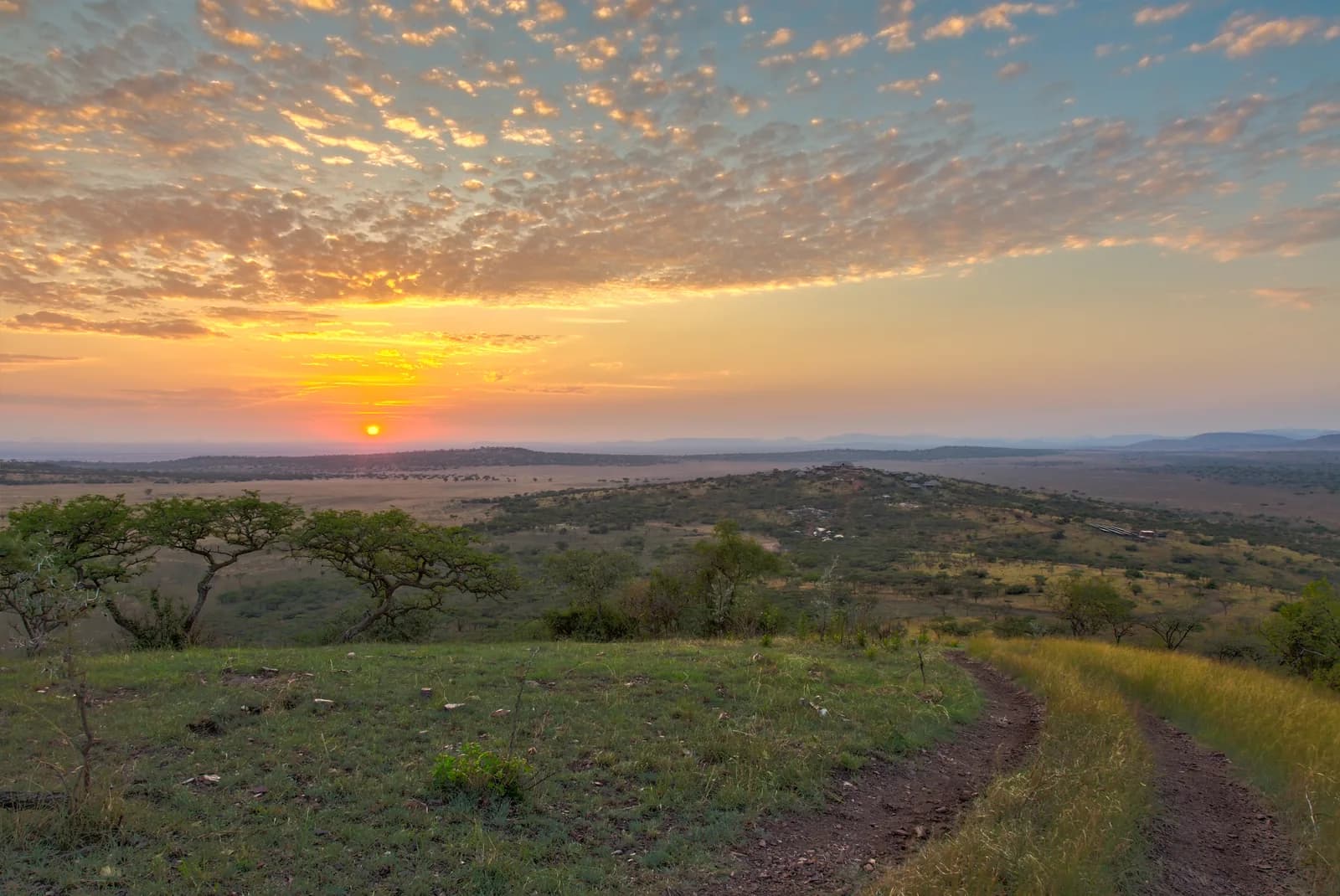
You are collected from camp in the dark, driven to the launch site, and lift off as the sun comes up. For around an hour the balloon drifts with the wind, sometimes a few metres above the grass, sometimes a few hundred, while the pilot follows whatever is moving below.
You land wherever the wind puts you. A ground crew follows, and the morning ends with a full breakfast laid out in the bush, before your guide collects you and the game drive continues from there.
Why it is worth it
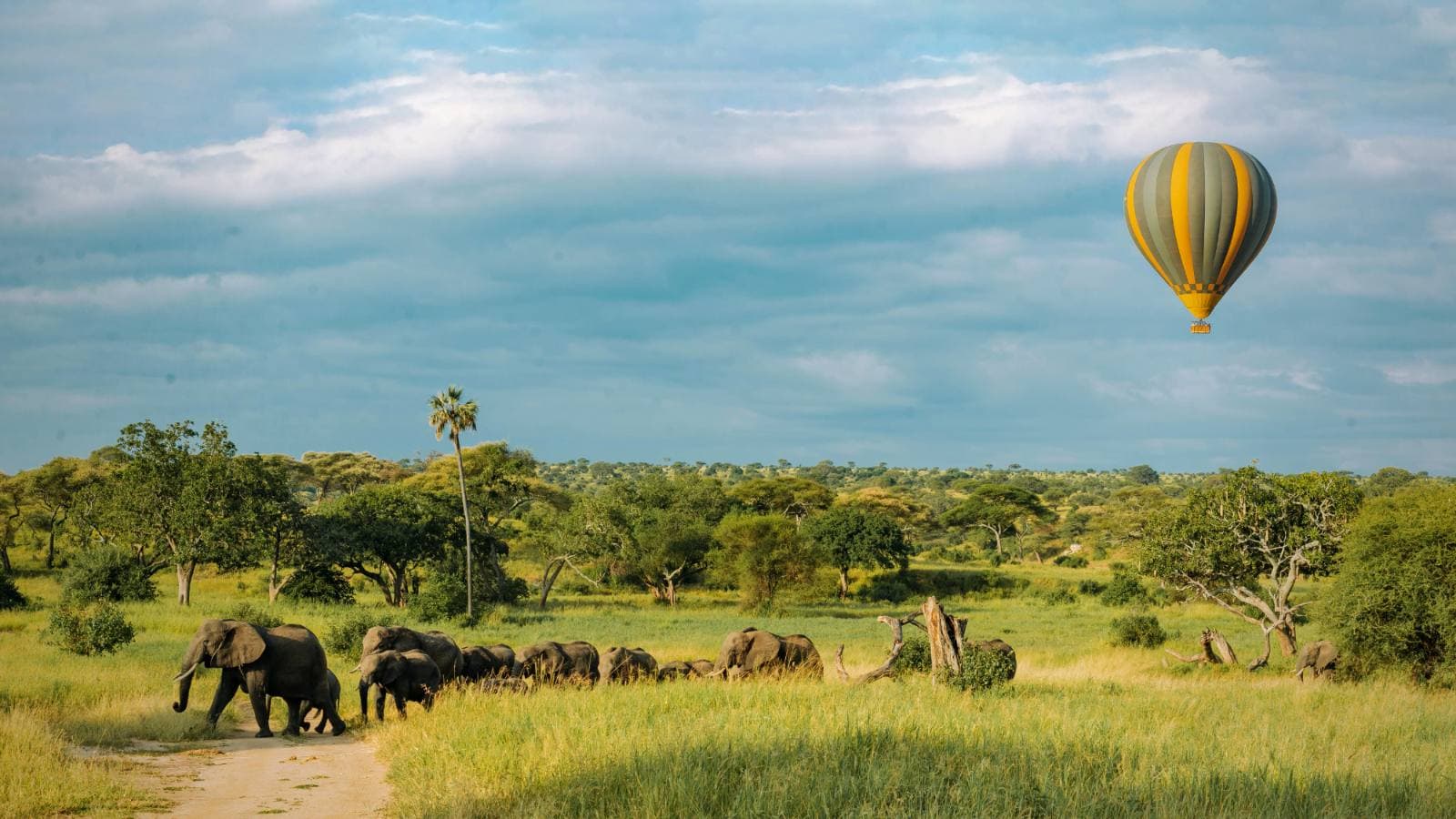
From a vehicle you see a sighting. From a balloon you see the system: herds strung out across the plains, the lines of trees marking where water runs, predators positioned relative to prey. It changes how you read the rest of the safari.
It is also quiet in a way driving never is. Between burns there is no engine at all, only the sound of whatever is below you.
Where and when
- Central Serengeti, around Seronera, operates for most of the year and is the most reliable choice.
- Southern Serengeti and Ndutu during calving season, roughly December to March. These are the best flights of the year if the herds are there.
- Western corridor and northern Serengeti seasonally, following the migration.
- Tarangire has flights in some seasons, over baobabs and elephant herds.
- Flights are not possible in the Ngorongoro Crater.
- Operators may suspend flights during the heaviest rains in April and May.
The honest caveats
- It is one of the most expensive single activities on a safari, priced per person, and we quote it separately so you can decide.
- Flights are cancelled for wind or rain, and the decision is made on the morning. Refunds follow the operator's own policy.
- You cannot choose where you land or guarantee what you fly over. The wind decides.
- There is a weight and mobility limit: you climb into a basket, stand throughout, and land crouched, sometimes with a bump.
- Not recommended in pregnancy, and usually not for children under seven.
- It must be booked in advance, especially in peak months, as baskets are limited.
How we fit it in
We plan it for your second or third morning in the Serengeti, not the first, so there is a spare morning to reschedule if the weather cancels it. Because you land in the bush, your guide meets you at the breakfast site and carries on with the day from there, so nothing is lost.
Gallery
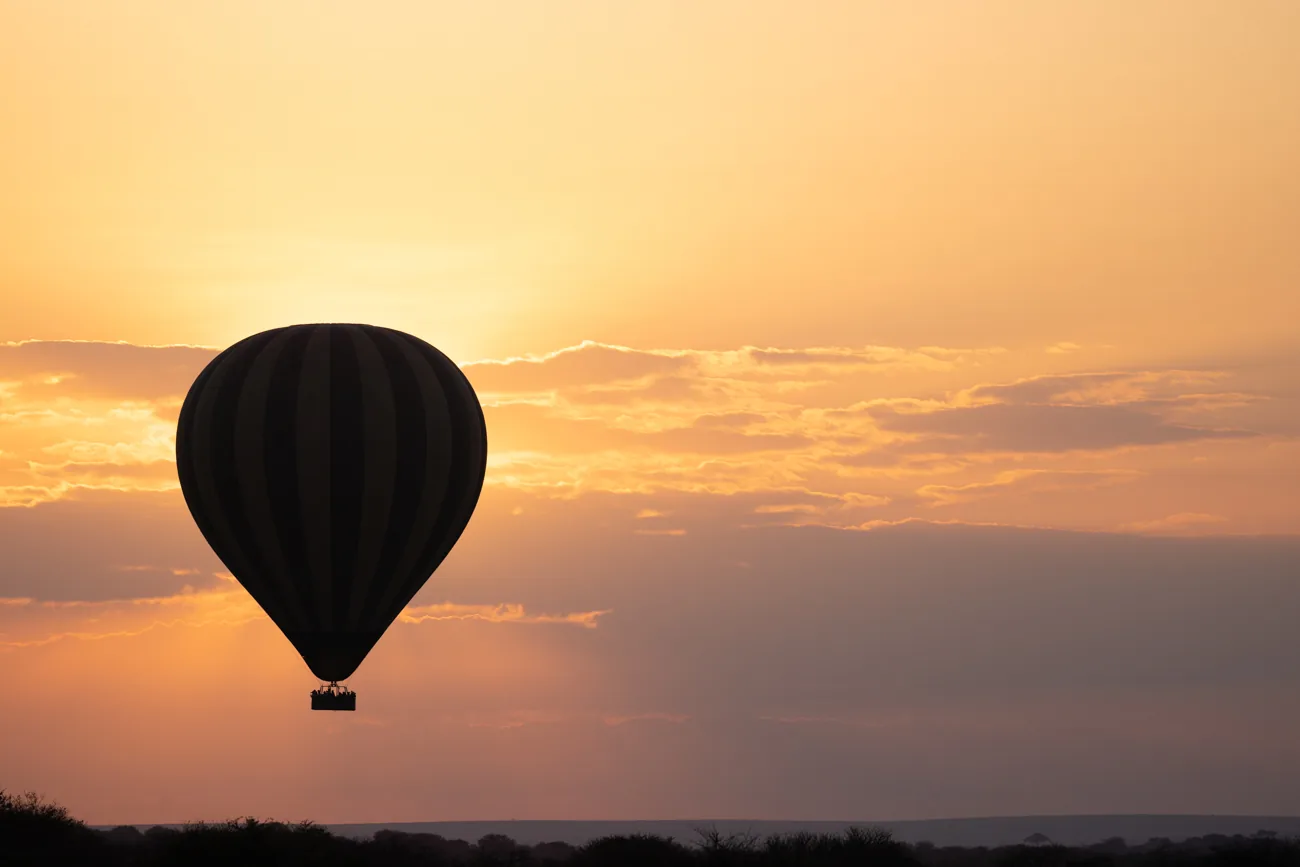 Photo: Dancing Duma Tented Camp
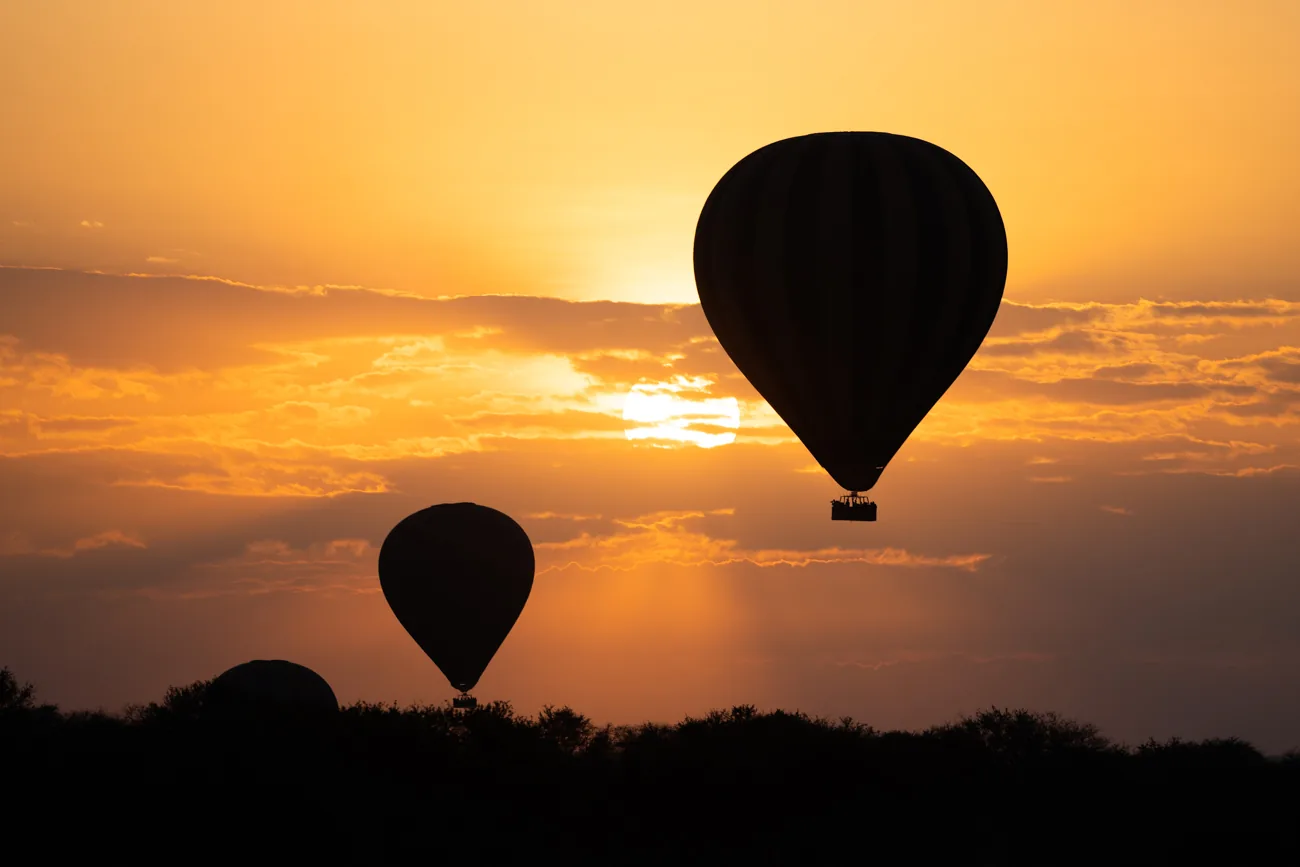 Photo: Dancing Duma Tented Camp
Questions travellers actually ask
Operators in the Serengeti are licensed and regulated, with experienced pilots and strict weather rules. The main discomfort is the early start and a sometimes bumpy landing.
Cancellations are for wind or rain and are decided that morning. That is why we schedule it with a spare morning afterwards so it can be moved.
Warm layers, because it is cold before sunrise and warms quickly once you are up. A hat, closed shoes, and nothing loose that could blow away.
Usually from about seven, and they must be tall enough to see over the basket. We check the operator's rules before booking.
Ask about this journey
Send us a few details and a person on the team will reply personally, not a template.
The park it happens over, and the season that makes it special.