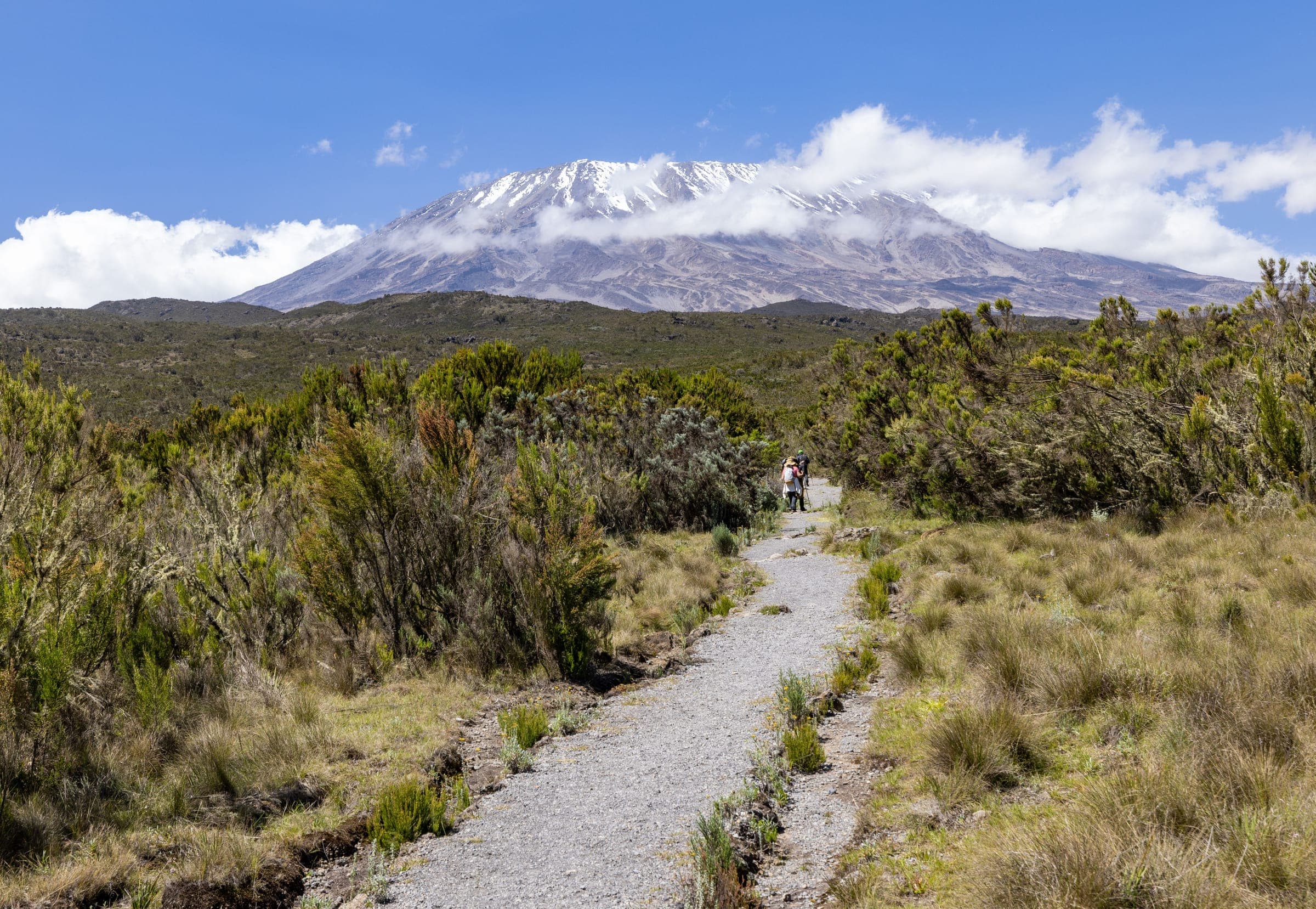
The most popular way up: forest, moorland, the Barranco Wall and a good climb-high, sleep-low profile. The price of that popularity is company.
Private climb1 / 4
Overview
Machame climbs from the south through some of the mountain's best scenery, and the day up to Lava Tower and down to Barranco gives your body a real chance to adjust. Seven days is a fair balance between time on the mountain and cost.
It is popular for good reasons, which is also its main drawback: expect full camps and a queue at the Barranco Wall in the high season. The first day in the forest can be wet and muddy, and the Wall is an easy scramble that can still feel exposed if you dislike heights.
If you'd rather start somewhere quiet and have one more day to adjust, Lemosho starts in the west and joins this trail on the Shira Plateau.
Highlights
Varied sceneryRainforest, moorland, the Shira Plateau and the Barranco Wall.
Climb high, sleep lowThe day up to Lava Tower and down to Barranco helps your body adjust.
Seven days on the mountainEnough time to adjust without the cost of an eighth.
Down a different wayYou come down by Mweka, not the path you went up.
Itinerary
Altitudes are approximate, and walking times depend on the weather and the group's pace.
These are examples, and every journey can use any of them. Final choice depends on availability on your dates.
Met at Kilimanjaro International Airport and driven to your hotel in Arusha. In the evening your lead guide checks your kit, briefs you on the climb and answers any last questions.
Meal plan: B&BB&B: breakfast only. Half board: breakfast and dinner. Full board: breakfast, lunch and dinner (on safari, lunch is often a picnic in the park).
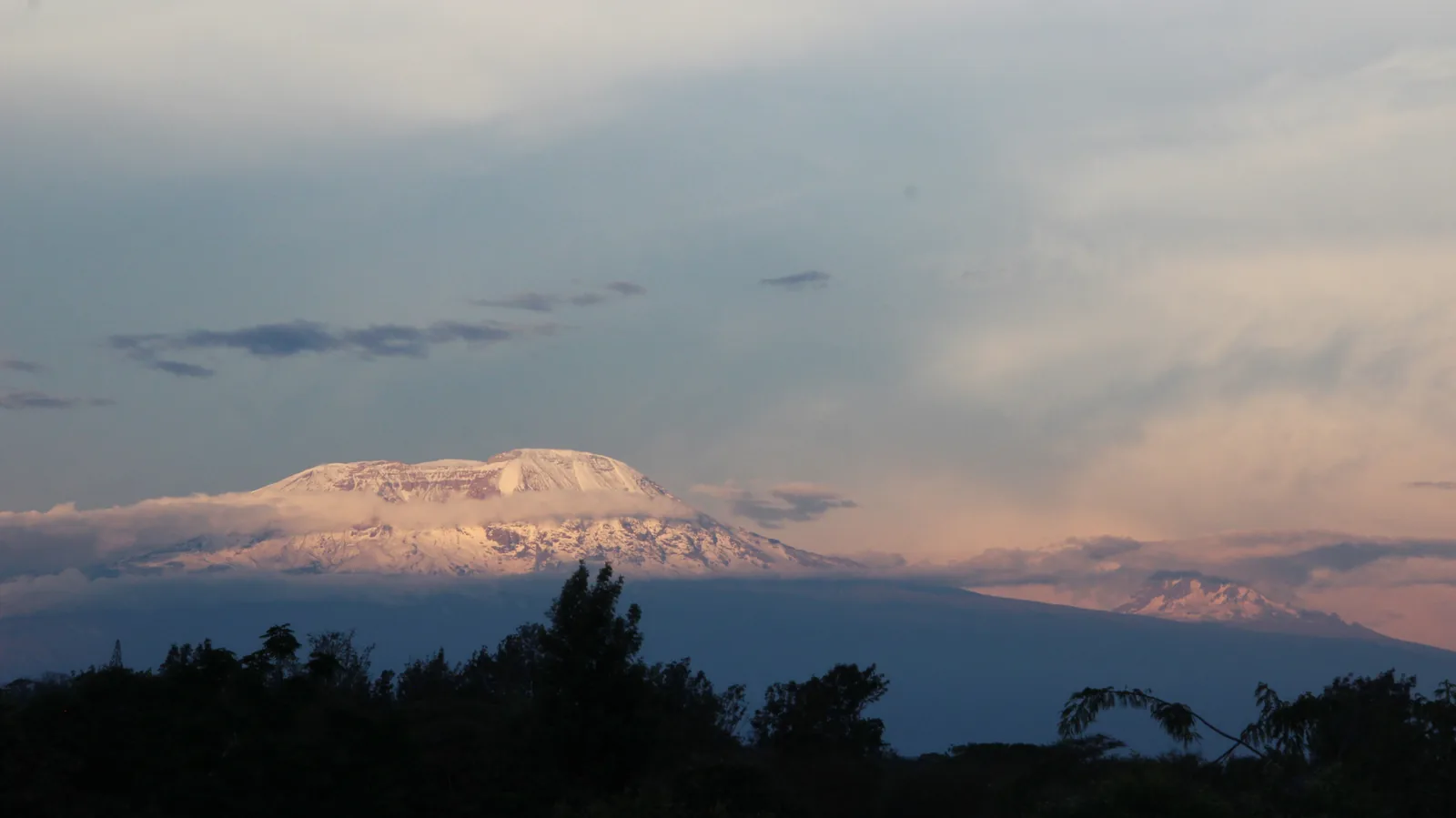
At 5,895 m Kilimanjaro is Africa's highest mountain, and every route to the top is a long walk with no technical climbing. The trails pass through rainforest, heath and moorland, and alpine desert before the summit zone.
Today
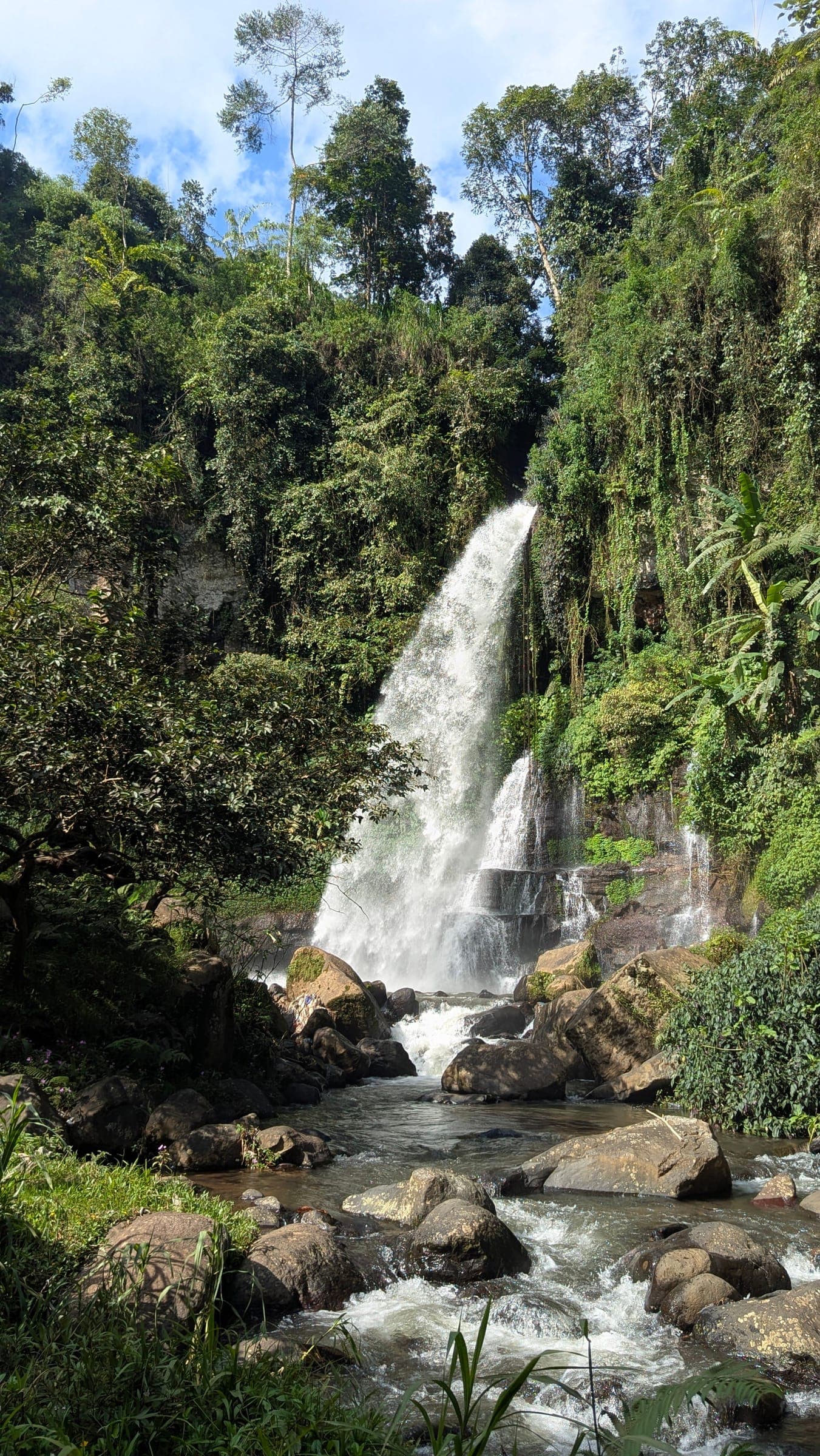
Register at Machame Gate, about 1,800 m, then five to seven hours up through rainforest. The path is often muddy.
Day 2 | Accommodation
Overnight: Machame Camp, 2,835 m
Meal plan: Full boardB&B: breakfast only. Half board: breakfast and dinner. Full board: breakfast, lunch and dinner (on safari, lunch is often a picnic in the park).
Machame Camp, 2,835 m
About Kilimanjaro
At 5,895 m Kilimanjaro is Africa's highest mountain, and every route to the top is a long walk with no technical climbing. The trails pass through rainforest, heath and moorland, and alpine desert before the summit zone.
Today
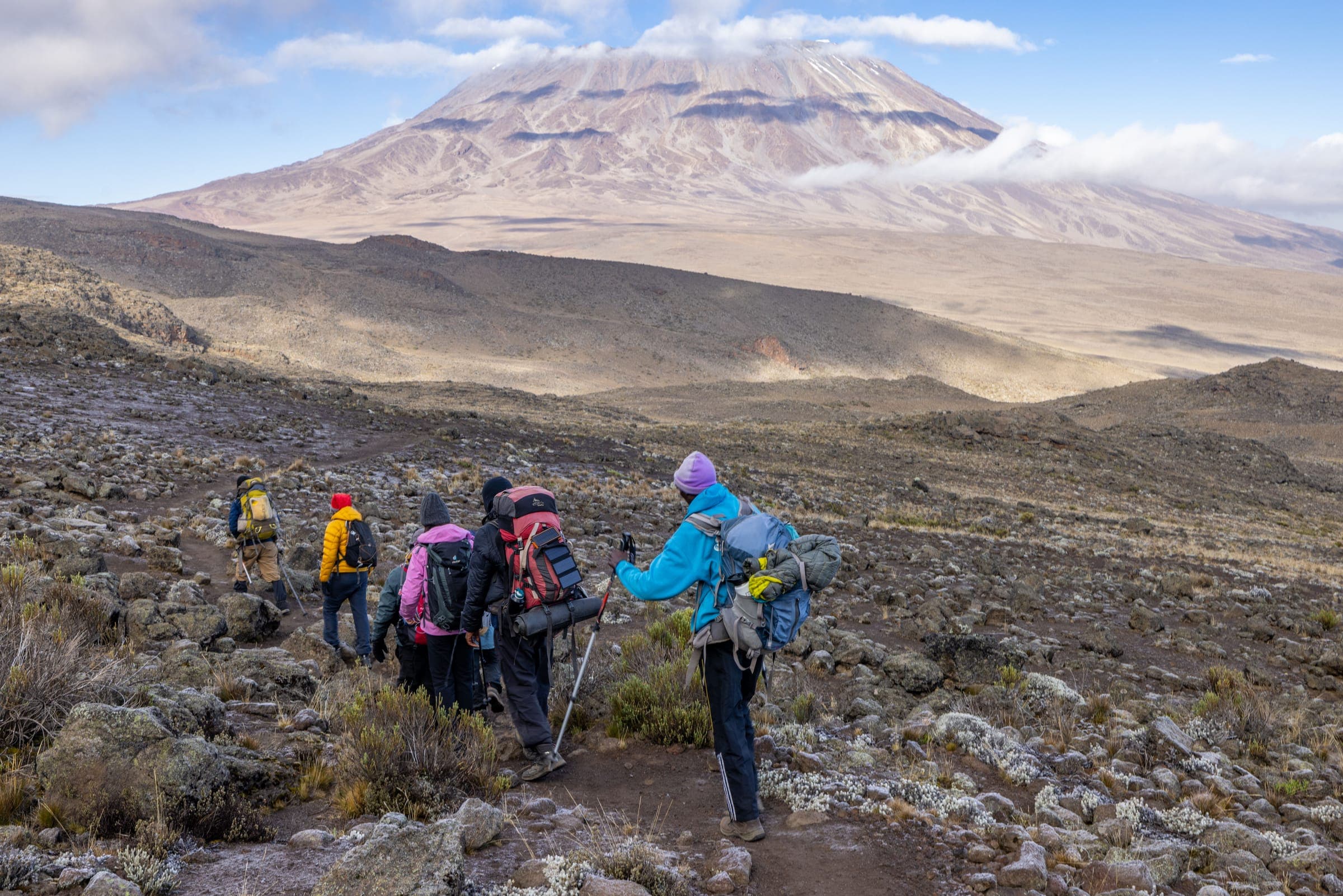
Out of the forest onto heath and moorland, with the first big views across the Shira Plateau.
Day 3 | Accommodation
Overnight: Shira 2 Camp, 3,850 m
Meal plan: Full boardB&B: breakfast only. Half board: breakfast and dinner. Full board: breakfast, lunch and dinner (on safari, lunch is often a picnic in the park).
Shira 2 Camp, 3,850 m
About Kilimanjaro
At 5,895 m Kilimanjaro is Africa's highest mountain, and every route to the top is a long walk with no technical climbing. The trails pass through rainforest, heath and moorland, and alpine desert before the summit zone.
Today
Up to Lava Tower for lunch, then down to sleep at Barranco: climb high, sleep low.
Day 4 | Accommodation
Overnight: Barranco Camp, 3,960 m
Meal plan: Full boardB&B: breakfast only. Half board: breakfast and dinner. Full board: breakfast, lunch and dinner (on safari, lunch is often a picnic in the park).
Barranco Camp, 3,960 m
About Kilimanjaro
At 5,895 m Kilimanjaro is Africa's highest mountain, and every route to the top is a long walk with no technical climbing. The trails pass through rainforest, heath and moorland, and alpine desert before the summit zone.
Today
Up the Barranco Wall, a scramble using your hands but no ropes, then a shorter walk to Karanga.
Day 5 | Accommodation
Overnight: Karanga Camp, 3,995 m
Meal plan: Full boardB&B: breakfast only. Half board: breakfast and dinner. Full board: breakfast, lunch and dinner (on safari, lunch is often a picnic in the park).
Karanga Camp, 3,995 m
About Kilimanjaro
At 5,895 m Kilimanjaro is Africa's highest mountain, and every route to the top is a long walk with no technical climbing. The trails pass through rainforest, heath and moorland, and alpine desert before the summit zone.
Today
A few hours up to base camp. Early dinner and an early night before summit night.
Day 6 | Accommodation
Overnight: Barafu Camp, 4,673 m
Meal plan: Full boardB&B: breakfast only. Half board: breakfast and dinner. Full board: breakfast, lunch and dinner (on safari, lunch is often a picnic in the park).
Barafu Camp, 4,673 m
About Kilimanjaro
At 5,895 m Kilimanjaro is Africa's highest mountain, and every route to the top is a long walk with no technical climbing. The trails pass through rainforest, heath and moorland, and alpine desert before the summit zone.
Today
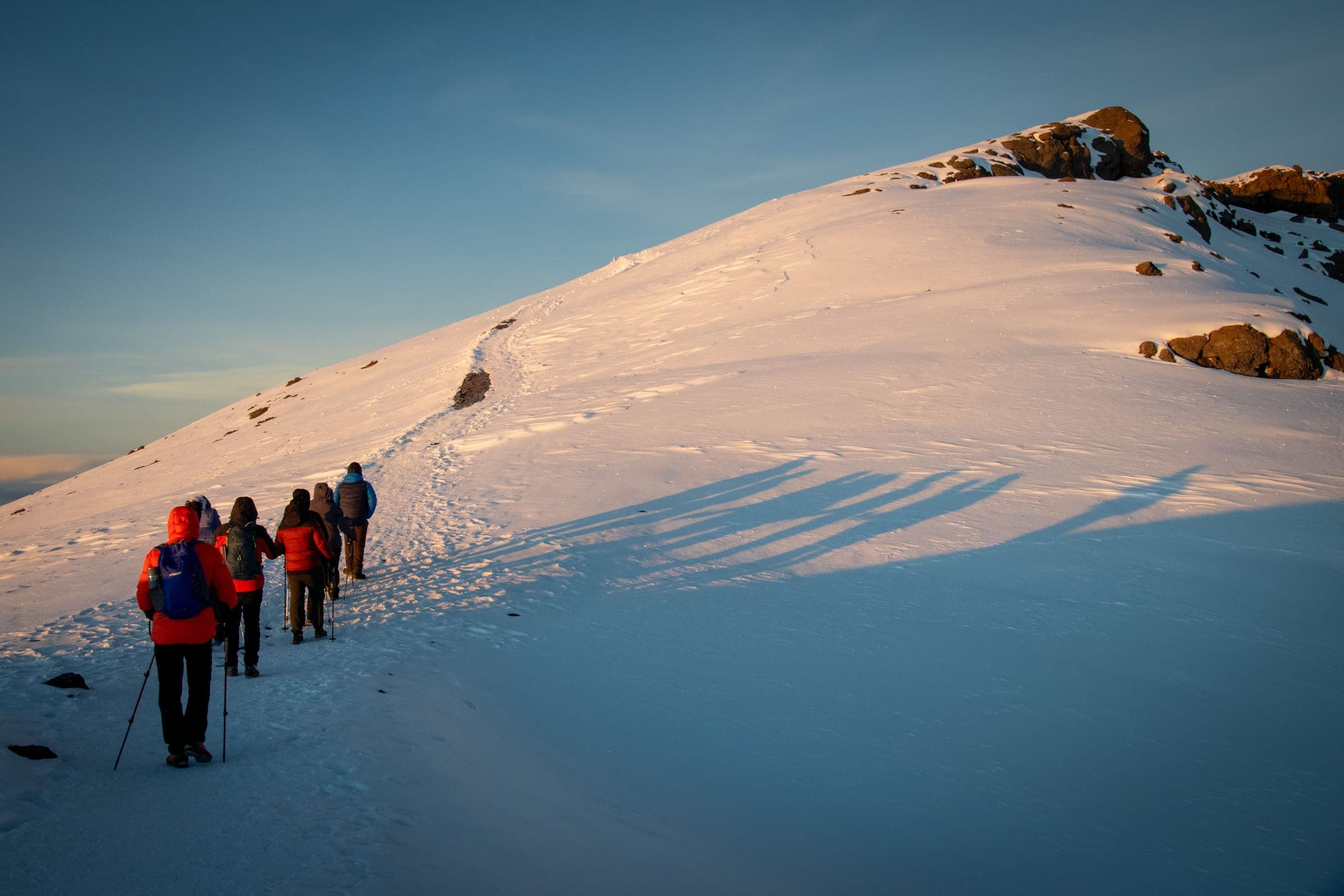
Leave around midnight, reach Stella Point on the crater rim at about sunrise, and Uhuru Peak soon after. Then the long walk down: 12 to 15 hours in all.
Day 7 | Accommodation
Overnight: Mweka Camp, 3,068 m
Meal plan: Full boardB&B: breakfast only. Half board: breakfast and dinner. Full board: breakfast, lunch and dinner (on safari, lunch is often a picnic in the park).
Mweka Camp, 3,068 m
About Kilimanjaro
At 5,895 m Kilimanjaro is Africa's highest mountain, and every route to the top is a long walk with no technical climbing. The trails pass through rainforest, heath and moorland, and alpine desert before the summit zone.
Today
Down through the forest to the gate, where you collect your certificate. Then the transfer to Kilimanjaro airport for an evening flight, or to a hotel if you have added a night.
Price
One guide price per person, confirmed for your dates.
Guide price
$2,364
per person
Based on 2 people sharing in low season. Your exact price depends on dates, group size and lodges, and is confirmed in writing before you book.
What your price covers, and what to budget for separately.
Included
Every Kilimanjaro park, camping and rescue fee, paid by us in advance. They are the largest single part of what a climb costs.
Tents and sleeping mats, and every meal on the mountain, cooked by your crew.
Licensed mountain guides, assistant guides, porters and a cook, from the gate to the summit and back.
Taken from your hotel to the start gate, and collected from the finishing gate at the end.
Treated drinking water every day on the mountain, so you never carry more than a day's worth.
Not included
International flights. Flights to and from Tanzania are booked by you. We will suggest arrival and departure times that fit the trip.
Visa. Paid by you, usually online before you travel. Visa information
Travel insurance. A condition of climbing with us. It must cover trekking to 6,000 m, medical treatment and emergency evacuation.
Tips. Tips for the crew, with recommended amounts for each role given in writing before you climb. How tipping works
Personal spending. Personal kit such as a sleeping bag, boots and poles (most of it can be hired in Arusha or Moshi), drinks off the mountain and souvenirs.
Packing
Warm layers for nights below freezing, a good sleeping bag, and boots you have already walked in. Most kit can be hired in Arusha or Moshi; boots are the exception.
Most nationalities need a visa: $50 for a single entry. US citizens pay $100 for a multiple-entry visa. Apply online before you travel to avoid the queue on arrival. Fees and rules change, so check with the Tanzanian embassy in your country.
Busy. It is the most popular route on the mountain, so in the dry months expect full camps and a queue at the Barranco Wall. Starting early helps on the Wall, but you won't avoid company altogether. If quiet matters to you, Lemosho starts on its own in the west, though it joins this trail at Shira 2.
It looks worse than it is. It is a scramble where you use your hands, with no ropes and no climbing skill needed, and your guide sets the pace and shows you where to put your feet. A few sections feel exposed if you dislike heights, so take them slowly.
No. Every route is a trek: long, steep walking at altitude, with no ropes or technical climbing. What you do need is the fitness to walk for several hours on consecutive days.
You come down with a guide, and anyone else in your group carries on with the others. Turning back is safety, not failure: the mountain will still be there, and nobody is ever pushed on against their guide's judgement.
Yes, in Arusha or Moshi. Sleeping bags, down jackets, trekking poles and more can all be hired, so you don't have to fly them in. Boots are the exception: bring your own, already broken in.
Tips are a real part of the crew's income on Kilimanjaro. We give you recommended amounts for each role in writing before you climb, so there is no guessing on the last day, and the tips go directly to each crew member.
Yes. Climb first, then go on safari or to the coast: your legs get a rest in the vehicle or on the beach, and you're not carrying safari fatigue up the mountain.
Quick enquiry
Ask about this journey
Send us a few details and a person on the team will reply personally, not a template.
Where to go next
The other routes, and what to add once you're down.
 Private climb1 / 4